World War I Explained: Causes, Course and Consequences
How a single assassination in Sarajevo dragged the world into four years of industrial slaughter.
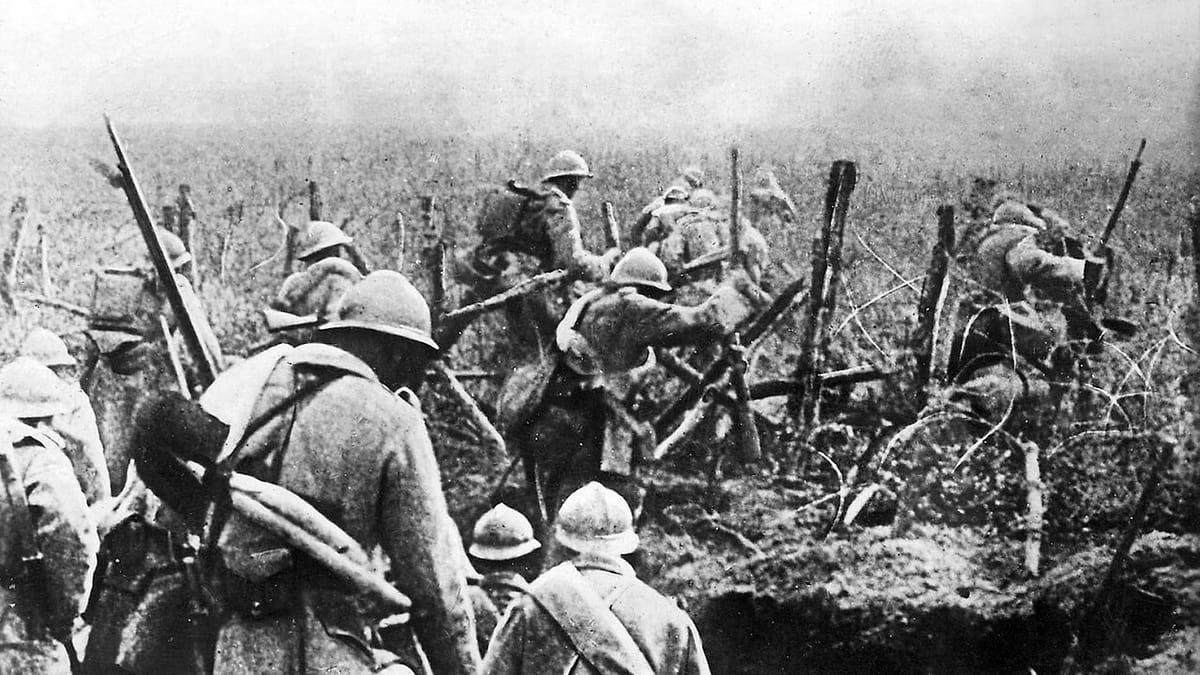
In brief: World War I, fought from 1914 to 1918, pitted the Allies (chiefly France, Britain, Russia, Italy and later the United States) against the Central Powers (Germany, Austria-Hungary, the Ottoman Empire and Bulgaria). It killed millions, brought down four empires, and its peace settlement sowed the seeds of later conflicts.
Causes
Historians point to a combination of factors: a system of rival alliances, an arms race, imperial competition, and nationalism in the Balkans. On 28 June 1914, Gavrilo Princip, a Bosnian Serb nationalist, assassinated Archduke Franz Ferdinand, heir to the Austro-Hungarian throne, in Sarajevo. Austria-Hungary declared war on Serbia, and within weeks the alliances pulled in Russia, Germany, France and Britain.
The war
On the Western Front, armies dug into trenches stretching from the North Sea to Switzerland. Machine guns, artillery and poison gas made attacks extraordinarily deadly: the Battle of the Somme in 1916 caused over a million casualties. The war was also fought in Eastern Europe, Italy, Africa and the Middle East, where the Ottoman Empire fought at Gallipoli, in Mesopotamia and in Palestine.
More than a million soldiers from British India served, and colonial troops from Africa and elsewhere fought for Britain and France.
The end
The United States entered in 1917. Russia, convulsed by revolution, left the war in 1918. Germany signed an armistice on 11 November 1918.
Consequences
The German, Austro-Hungarian, Russian and Ottoman empires collapsed. The 1919 Treaty of Versailles imposed heavy terms on Germany, fuelling resentment exploited by the Nazis. Britain and France divided former Ottoman Arab lands into mandates, shaping today's Middle East. The League of Nations was founded but failed to prevent another world war.
Frequently Asked Questions
What started World War I?
The immediate trigger was the assassination of Archduke Franz Ferdinand of Austria-Hungary in Sarajevo on 28 June 1914. Deeper causes included alliances, militarism, imperial rivalry and nationalism.
How many people died in World War I?
Estimates vary, but around 9 to 10 million military deaths and millions of civilian deaths are commonly cited.