The American Revolution Explained: Causes, Key Battles and Legacy
How 13 British colonies declared independence in 1776 and won a war that created the United States.
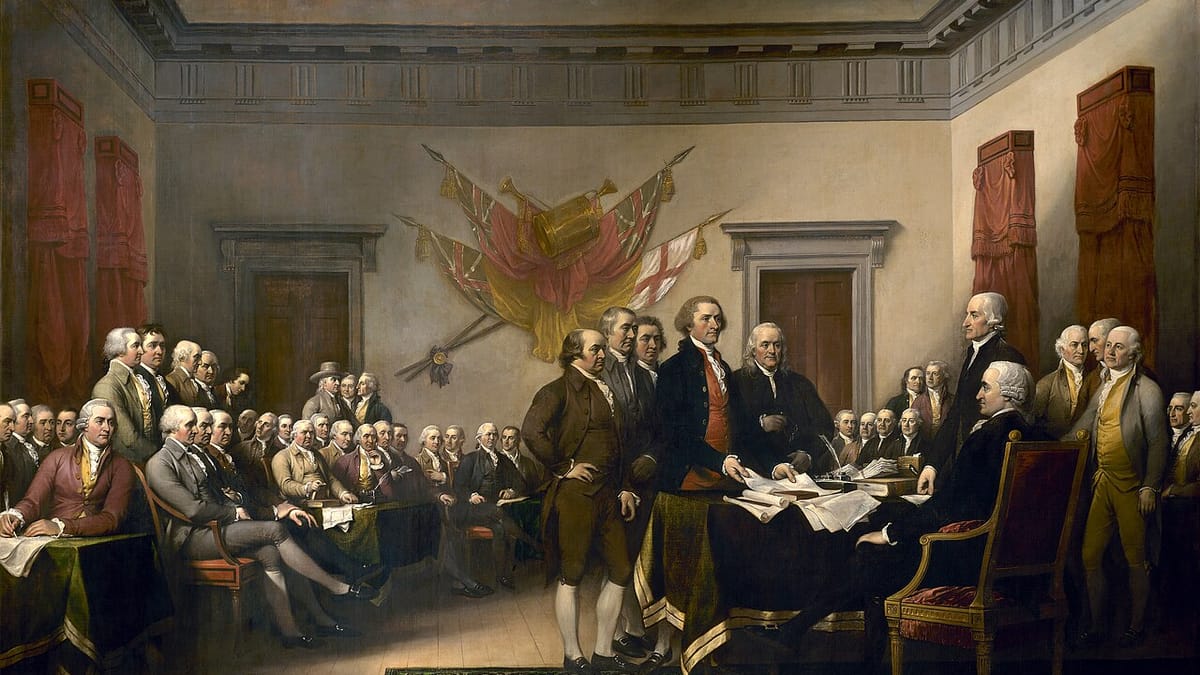
In brief: The American Revolution was the political and military struggle in which 13 British colonies in North America rejected British rule, declared independence on July 4, 1776, and won the Revolutionary War with help from France. The Treaty of Paris in 1783 recognized the United States as an independent nation. Its ideas about natural rights and government by consent influenced revolutions around the world.
Causes
Britain emerged from the Seven Years' War (1756 to 1763), known in America as the French and Indian War, victorious but deeply in debt. Parliament began taxing the colonies directly, through the Stamp Act of 1765 and the Townshend Acts of 1767. Colonists, who had no representatives in Parliament, protested under the slogan "no taxation without representation". Tensions rose with the Boston Massacre in 1770, when British soldiers killed five colonists, and the Boston Tea Party on December 16, 1773, when protesters dumped tea into Boston Harbor. Parliament responded with punitive laws that colonists called the Intolerable Acts.
War begins
Fighting broke out at Lexington and Concord in Massachusetts on April 19, 1775. The Second Continental Congress created the Continental Army and appointed George Washington as commander. In January 1776, Thomas Paine's pamphlet Common Sense made a popular case for independence.
The Declaration of Independence
On July 4, 1776, Congress adopted the Declaration of Independence, drafted mainly by Thomas Jefferson. It declared that "all men are created equal" with unalienable rights to "Life, Liberty and the pursuit of Happiness", and that governments derive their powers "from the consent of the governed". The promise was not extended to enslaved people, Native Americans or women, a contradiction critics noted at the time. In March 1776 Abigail Adams had urged her husband John to "remember the ladies" in the new laws.
Turning points
- Trenton, December 1776: Washington crossed the icy Delaware River and won a surprise victory that revived morale.
- Saratoga, 1777: the surrender of a British army persuaded France to sign an alliance with the Americans in 1778. Spain and the Dutch Republic also joined the war against Britain.
- Valley Forge, winter 1777 to 1778: the army endured hunger and disease, and emerged better trained under the Prussian officer Baron von Steuben.
- Yorktown, 1781: American and French forces, supported by a French fleet, trapped General Charles Cornwallis's army in Virginia, forcing his surrender on October 19.
Peace and a new nation
The Treaty of Paris, signed on September 3, 1783, recognized American independence with borders reaching the Mississippi River. About 60,000 to 80,000 Loyalists, Americans who had remained loyal to Britain, left for Canada, Britain and elsewhere, along with thousands of formerly enslaved people who had been promised freedom for joining the British side. The weak Articles of Confederation gave way to the Constitution in 1789.
Legacy
The revolution created the first modern republic of its size and inspired the French Revolution of 1789, the Haitian Revolution and independence movements in Latin America. Its principles were later invoked by abolitionists, suffragists and civil rights leaders demanding that the nation live up to the Declaration's words.
Frequently Asked Questions
When did the American Revolution start and end?
Fighting began in April 1775 and effectively ended with the British surrender at Yorktown in October 1781. The Treaty of Paris formally ended the war in 1783.
Why did the American colonies rebel?
Mainly over taxation imposed by a Parliament in which they had no representation, and broader disputes about self-government and rights.