The Holocaust: Understanding the Genocide of European Jews
How Nazi Germany planned and carried out the murder of six million Jews.
In brief: The Holocaust was the genocide of about six million European Jews, around two thirds of Europe's Jewish population, by Nazi Germany and its collaborators during World War II. The Nazis also persecuted and murdered Roma, disabled people, political opponents, gay men, Soviet prisoners of war and others.
From discrimination to genocide
After Adolf Hitler came to power in 1933, Jews in Germany were stripped of their rights step by step. The Nuremberg Laws of 1935 removed their citizenship and banned marriages between Jews and non-Jews. On the night of 9 to 10 November 1938, known as Kristallnacht, synagogues, homes and businesses were attacked across Germany and about 30,000 Jewish men were sent to concentration camps.
Ghettos and mass shootings
After invading Poland in 1939, the Nazis forced Jews into overcrowded ghettos such as Warsaw and Łódź, where many died of starvation and disease. After the invasion of the Soviet Union in 1941, mobile killing units known as Einsatzgruppen shot more than a million Jews, including about 33,000 at Babi Yar near Kyiv in two days.
The death camps
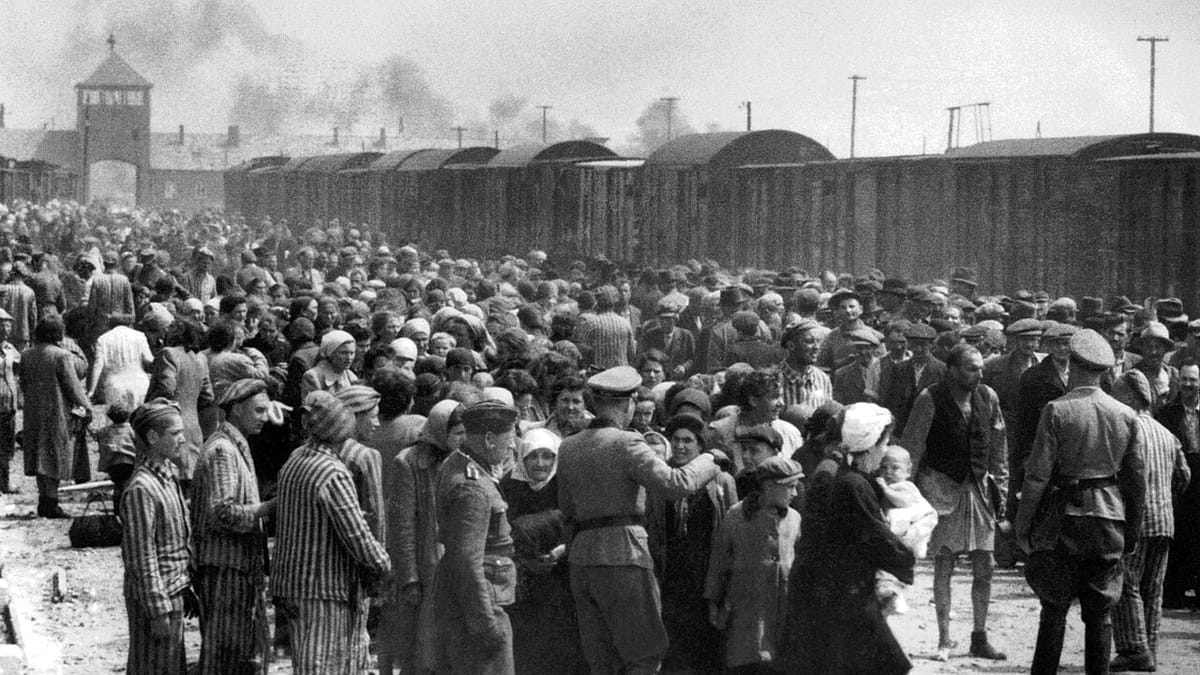
In January 1942, at the Wannsee Conference, senior officials coordinated the "Final Solution", the plan to murder all European Jews. Jews were deported by train to extermination camps in occupied Poland, including Auschwitz-Birkenau, Treblinka, Sobibor and Belzec, where most were murdered in gas chambers. About 1.1 million people were killed at Auschwitz alone.
Remembering
The Holocaust led to new international law, including the 1948 Genocide Convention. Survivors' testimony, museums and education aim to ensure it is never forgotten or denied.
Frequently Asked Questions
When is Holocaust Remembrance Day?
The United Nations marks International Holocaust Remembrance Day on 27 January, the anniversary of the liberation of Auschwitz in 1945.