Sir Syed Ahmad Khan: The Reformer Who Founded Aligarh
How a judge, scholar and educator convinced Indian Muslims to embrace modern education after 1857.
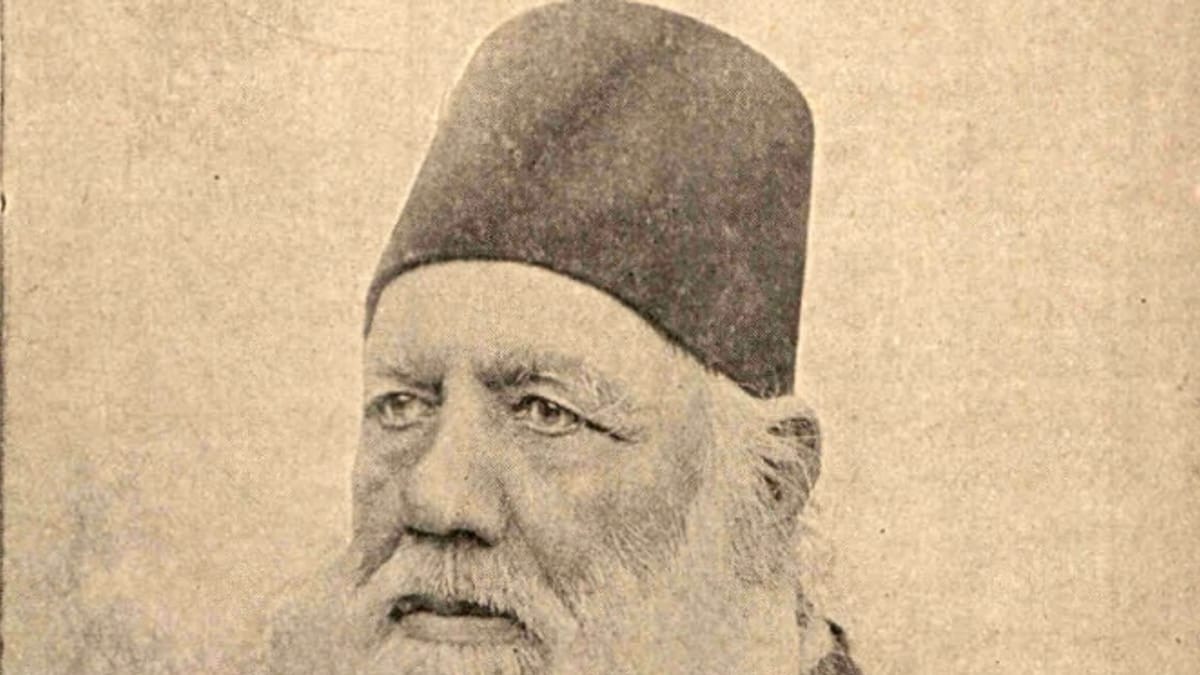
In brief: Sir Syed Ahmad Khan (1817 to 1898) was a scholar, judicial officer, writer and educational reformer in British India. After the revolt of 1857 he dedicated his life to persuading Indian Muslims to adopt modern scientific education and to rebuild trust with the British. The college he founded at Aligarh in 1875 became Aligarh Muslim University and trained many of the leaders of the Pakistan Movement.
Early life
Syed Ahmad was born in Delhi on 17 October 1817 into a family connected to the Mughal court. He received a traditional education in the Quran, Persian, Arabic, mathematics and medicine. In 1838 he joined the judicial service of the East India Company, rising to become a sub-judge.
The revolt of 1857
During the revolt of 1857 he was serving in Bijnor and helped protect British residents. The revolt's suppression was devastating for Muslims, whom many British officials blamed for the uprising. In 1859 Syed Ahmad wrote Asbab-e-Baghawat-e-Hind, The Causes of the Indian Revolt, which argued that the British themselves were responsible, through ignorance of Indian society and the exclusion of Indians from the legislative council. It was a bold criticism for a government servant.
Education and reform
Sir Syed concluded that Muslims could recover only through modern education. He founded the Scientific Society in Ghazipur in 1864, later moved to Aligarh, to translate Western scientific works into Urdu. After visiting England in 1869 and 1870, he started the journal Tahzib-ul-Akhlaq to promote social reform and a rational approach to religion. In 1875 he founded the Muhammadan Anglo-Oriental College at Aligarh, modelled on Oxford and Cambridge. It became Aligarh Muslim University in 1920.
Political views
Sir Syed advised Muslims to stay away from the Indian National Congress, founded in 1885, fearing that representative government on a simple majority basis would leave Muslims powerless. He is often credited with an early expression of the idea that Hindus and Muslims were distinct communities with separate political interests, an idea later developed into the two-nation theory. In 1886 he founded the Muhammadan Educational Conference to spread modern education. He was knighted in 1888.
Criticism
Religious conservatives attacked his rational interpretation of Islam, and some called him an unbeliever. Nationalists later criticised his loyalty to the British. He remained convinced that education, not confrontation, was the path forward.
Legacy
Sir Syed died in Aligarh on 27 March 1898. The Aligarh Movement produced generations of Muslim lawyers, administrators and politicians, and Aligarh students were among the most active campaigners for Pakistan in the 1940s. He is honoured in both India and Pakistan, where universities, roads and institutions bear his name.
Frequently Asked Questions
What did Sir Syed Ahmad Khan found?
The Muhammadan Anglo-Oriental College at Aligarh in 1875, which became Aligarh Muslim University in 1920.
What book did Sir Syed write about 1857?
Asbab-e-Baghawat-e-Hind, The Causes of the Indian Revolt, written in 1859.