Faiz Ahmed Faiz: The Poet of Love and Revolution
Imprisoned and exiled, he wrote some of the most beloved verses in the Urdu language.
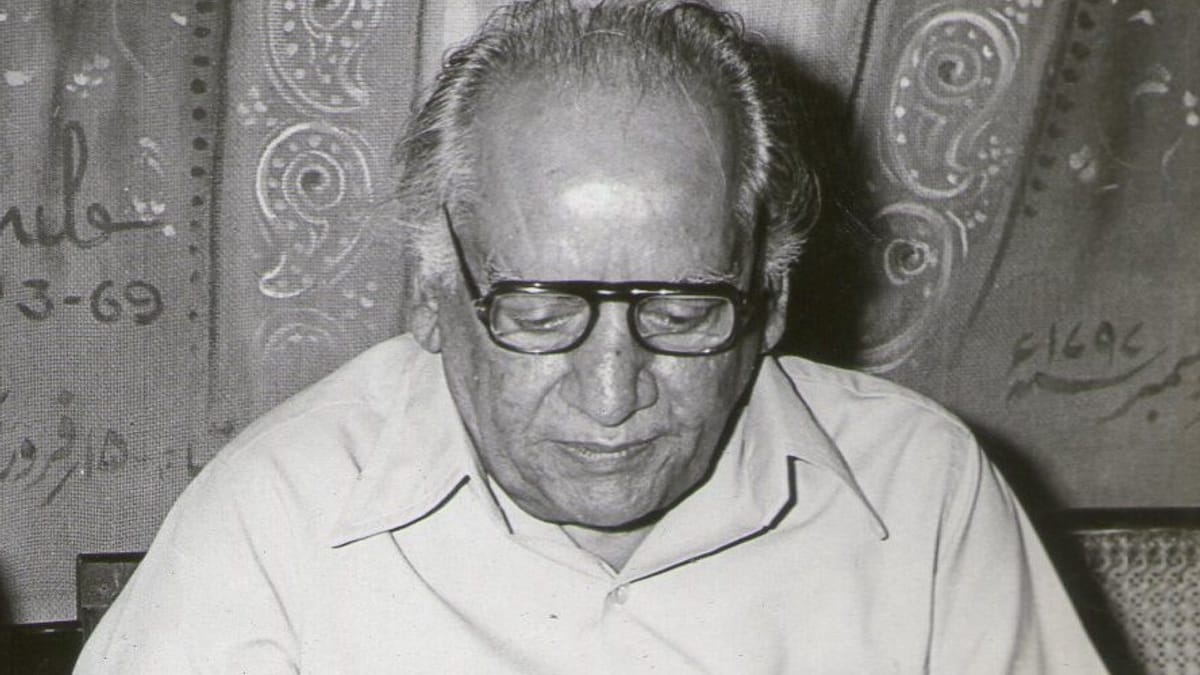
In brief: Faiz Ahmed Faiz (1911 to 1984) was a Pakistani poet and one of the most celebrated writers in Urdu. His poetry joined the classical language of love with themes of justice and resistance. He was imprisoned and spent years in exile, and his verses are still sung at protests across South Asia.
Early life
Faiz was born on 13 February 1911 in Kala Qader, near Sialkot. He studied Arabic and English literature in Lahore and taught at colleges in Amritsar and Lahore. He joined the Progressive Writers' Movement, which sought to use literature for social change.
Journalist and prisoner
After serving in the British Indian Army during the Second World War, he became editor of the newspaper The Pakistan Times. In 1951 he was arrested in connection with the Rawalpindi Conspiracy, an alleged plot to overthrow the government, and spent about four years in prison. Some of his finest poetry, collected in Dast-e-Saba and Zindan Nama, was written behind bars.
Exile and fame
He received the Soviet Union's Lenin Peace Prize in 1962. After General Zia ul Haq's coup in 1977, he went into exile in Beirut, where he edited a literary magazine for Afro-Asian writers. He returned to Pakistan in 1982 and died in Lahore on 20 November 1984.
Legacy
Poems such as "Mujh se pehli si mohabbat" and "Hum dekhenge" are recited and sung by singers including Noor Jehan and Iqbal Bano. He was nominated for the Nobel Prize in Literature and is honoured annually at the Faiz Festival in Lahore.
Frequently Asked Questions
What is Faiz's poem 'Hum Dekhenge' about?
Written in 1979 under Zia ul Haq's rule, it uses religious imagery to promise that tyranny will fall. Iqbal Bano's 1986 performance made it an anthem of resistance.