Parveen Shakir: The Poet Who Gave Urdu Poetry a Woman's Voice
From Khushbu to her death at 42, the life of one of Pakistan's most loved modern poets.
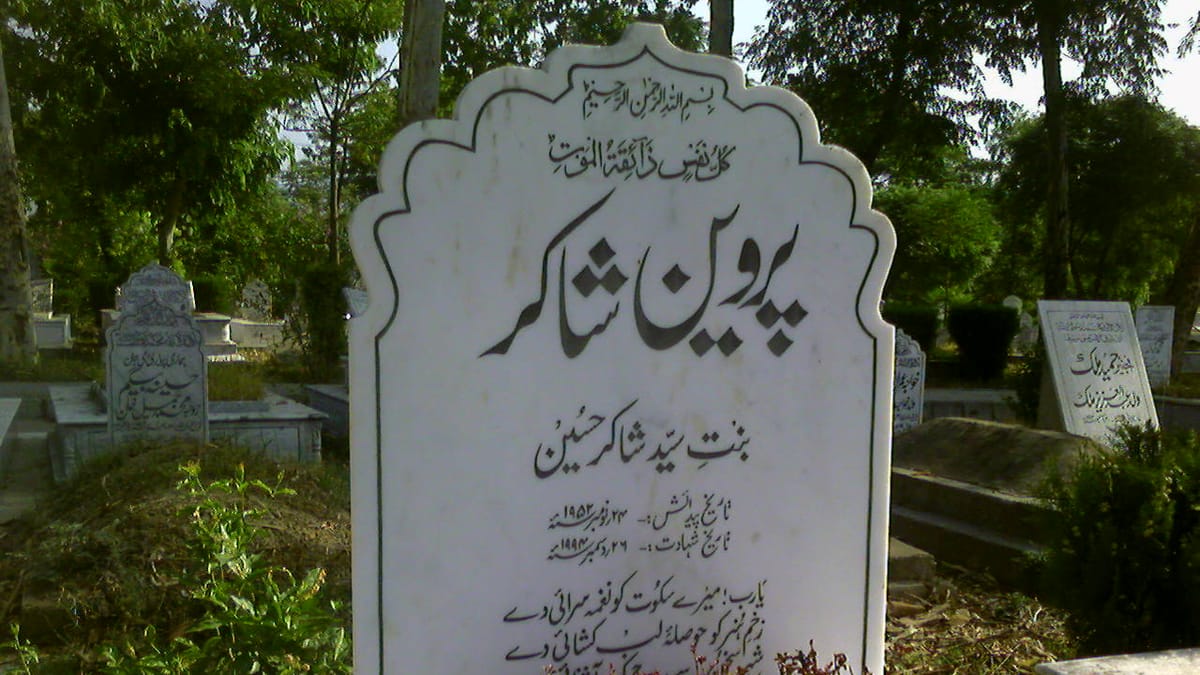
In brief: Parveen Shakir (1952 to 1994) was a Pakistani poet, teacher and civil servant, regarded as one of the most important voices in modern Urdu poetry. Her first collection, Khushbu (Fragrance), published in 1976, won the Adamjee Literary Award and made her famous. She wrote openly about love, desire, heartbreak and the experiences of women, using the feminine voice in a tradition long dominated by men. She died in a car accident in Islamabad at the age of 42.
Early life and education
Parveen Shakir was born in Karachi on 24 November 1952 into a family that had migrated from Bihar. She began writing poetry as a teenager. She earned master's degrees in English literature and in linguistics from the University of Karachi and later a master's in public administration from Harvard University.
Teacher and civil servant
She taught English at Abdullah Girls College in Karachi for nine years. In 1982 she passed the Central Superior Services examination and joined Pakistan's customs service, working in the civil service while continuing to write. She married, had a son, and later divorced, experiences that shaped much of her poetry.
Her poetry
Her collections include Khushbu (1976), Sad-barg (1980), Khud-kalami (1990) and Inkar (1990). Her collected works were published as Mah-e-Tamam, and a final collection, Kaf-e-Aina, appeared after her death. She wrote both ghazals and free verse.
What made her distinctive was her voice. In classical Urdu poetry, even women poets often wrote as men addressing a beloved. Parveen Shakir wrote as a woman: about the joy of falling in love, the loneliness of a failed marriage, motherhood and the constraints society placed on women. Her language was simple, musical and intimate, and young readers, especially women, embraced it.
Recognition
She received the Adamjee Literary Award for Khushbu and the Pride of Performance, one of Pakistan's highest civilian honours, in 1990. Her poems became popular as songs, and she remains one of the most quoted poets on social media in Pakistan and India.
Death and legacy
On 26 December 1994 her car collided with a bus in Islamabad while she was on her way to work. She died from her injuries and was buried in Islamabad. The Parveen Shakir Trust was set up to keep her work alive, and a road in Islamabad was named after her. Decades after her death, new generations continue to discover her poetry, and she is remembered as the poet who made it possible for women in Urdu literature to speak in their own voice.
Frequently Asked Questions
What was Parveen Shakir's first book?
Khushbu, published in 1976, which won the Adamjee Literary Award.
How did Parveen Shakir die?
She died in a car accident in Islamabad on 26 December 1994, at the age of 42.