The Mughal Empire: A History from Babur to Bahadur Shah Zafar
For three centuries the Mughals ruled most of South Asia and left monuments from the Taj Mahal to the Badshahi Mosque.
In brief: The Mughal Empire ruled much of the Indian subcontinent from 1526 to 1857. Founded by Babur after his victory at the First Battle of Panipat, it reached its height under Akbar, Jahangir, Shah Jahan and Aurangzeb, when it was one of the largest and wealthiest states in the world. Its architecture, art, language and administration shaped modern India, Pakistan and Bangladesh.
Babur and Humayun
Babur, a Central Asian prince descended from Timur and Genghis Khan, defeated Ibrahim Lodi, the Sultan of Delhi, at Panipat in 1526. His son Humayun lost the throne to the Afghan ruler Sher Shah Suri in 1540 and spent fifteen years in exile, partly at the Safavid court in Persia, before regaining Delhi in 1555 shortly before his death.
Akbar the Great
Akbar, who reigned from 1556 to 1605, expanded the empire across northern and central India and built an efficient administration, including the mansabdari system of ranked officials and a land revenue system associated with his finance minister Raja Todar Mal. He abolished the jizya tax on non-Muslims, married Rajput princesses, included Hindus at the highest levels of government and held debates between scholars of different religions at Fatehpur Sikri.
Jahangir and Shah Jahan
Under Jahangir, from 1605 to 1627, his wife Nur Jahan became one of the most powerful women in Mughal history, issuing coins in her name. Shah Jahan, from 1628 to 1658, presided over the golden age of Mughal architecture. He built the Taj Mahal in Agra as a tomb for his wife Mumtaz Mahal, the Red Fort in Delhi and the Shalimar Gardens in Lahore.
Aurangzeb
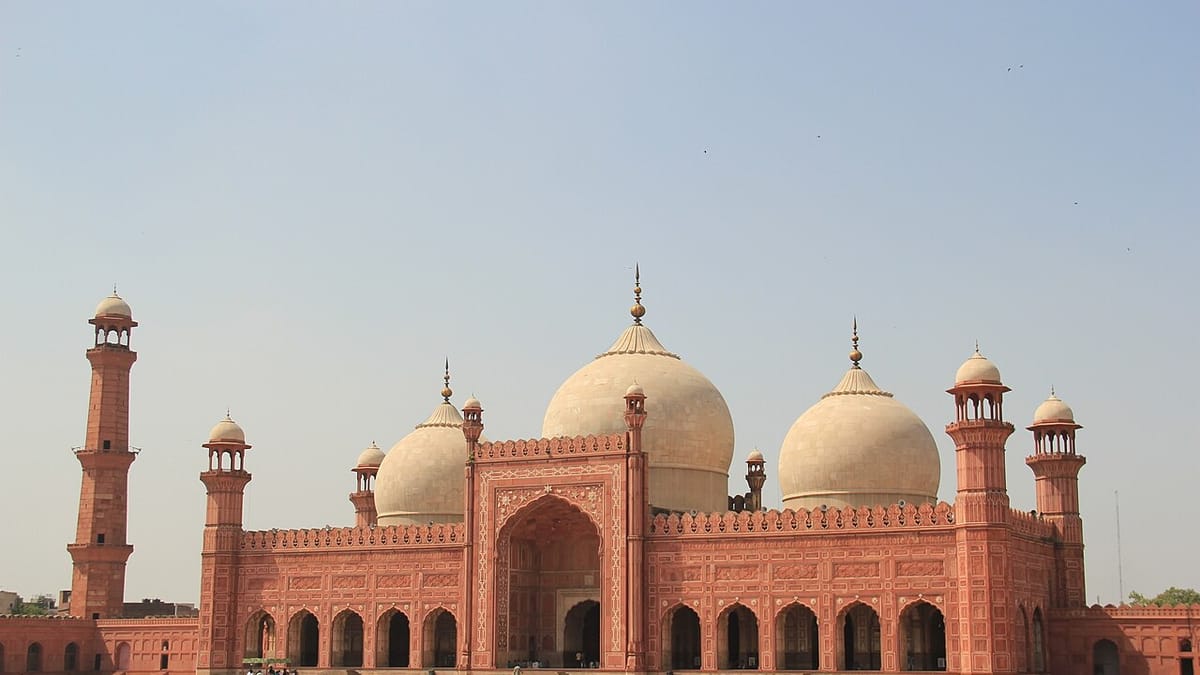
Aurangzeb seized the throne in 1658 and ruled until 1707. The empire reached its greatest extent, stretching deep into southern India, and he built the Badshahi Mosque in Lahore. His long wars in the Deccan against the Marathas drained the treasury, and his reimposition of the jizya and stricter religious policies remain debated by historians.
Decline and end
After Aurangzeb's death, the empire fragmented as provincial governors, the Marathas, the Sikhs and others gained power. The Persian ruler Nader Shah sacked Delhi in 1739. The British East India Company gradually took control, and after the revolt of 1857, in which the rebels proclaimed the elderly emperor Bahadur Shah Zafar as their leader, the British exiled him to Rangoon. The Mughal dynasty ended, and India came under direct British rule.
Legacy
The Mughals left a cultural legacy visible every day in South Asia: Mughal architecture in Lahore, Delhi and Agra, miniature painting, cuisine, gardens and the development of the Urdu language, which grew from the mixing of Persian, Arabic, Turkish and local languages in the empire's camps and cities.
Frequently Asked Questions
Who founded the Mughal Empire?
Babur, after defeating Ibrahim Lodi at the First Battle of Panipat in 1526.
Which Mughal emperor built the Taj Mahal?
Shah Jahan, as a tomb for his wife Mumtaz Mahal.
Who was the last Mughal emperor?
Bahadur Shah Zafar, exiled by the British to Rangoon after the 1857 revolt.