The Bill of Rights Explained: The First 10 Amendments in Plain English
Free speech, religion, a fair trial and more: what each of the first ten amendments protects.
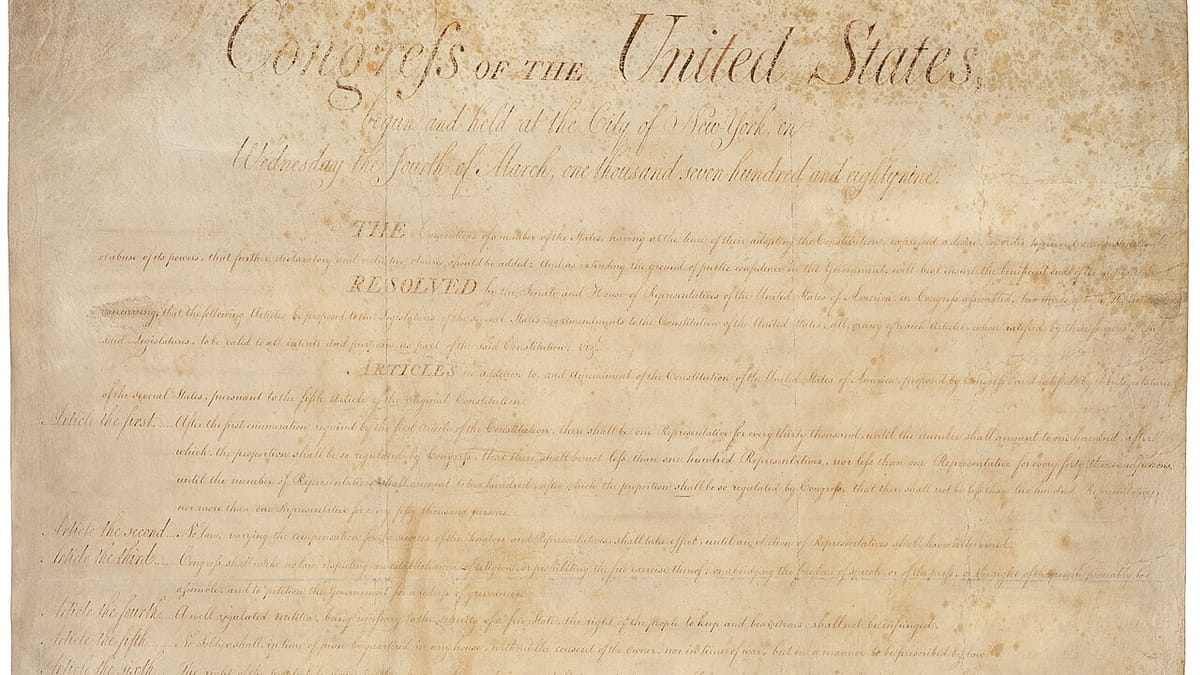
In brief: The Bill of Rights is the name given to the first ten amendments to the United States Constitution. Drafted mainly by James Madison and ratified on December 15, 1791, they limit the power of government and protect individual liberties such as freedom of speech and religion, the right to a fair trial and protection from unreasonable searches.
Why it was added
When the Constitution was proposed in 1787, many Americans worried that it created a powerful national government without any list of protected rights. Several states ratified only on the understanding that amendments would follow. Madison, who had initially thought a bill of rights unnecessary, proposed amendments in the first Congress in 1789, drawing on the Virginia Declaration of Rights and English traditions such as the 1689 English Bill of Rights.
The ten amendments
- First Amendment: freedom of religion, speech, the press, peaceful assembly and the right to petition the government. It bars Congress from establishing an official religion.
- Second Amendment: "the right of the people to keep and bear Arms". The Supreme Court held in District of Columbia v. Heller (2008) that it protects an individual right to own a gun for self-defense.
- Third Amendment: no quartering of soldiers in private homes in peacetime without the owner's consent.
- Fourth Amendment: protection against unreasonable searches and seizures; warrants require probable cause.
- Fifth Amendment: the right not to incriminate oneself, protection against being tried twice for the same crime, due process of law and compensation when the government takes private property.
- Sixth Amendment: the right to a speedy and public trial by an impartial jury, to know the charges, to confront witnesses and to have a lawyer.
- Seventh Amendment: the right to a jury trial in many civil cases.
- Eighth Amendment: no excessive bail or fines and no cruel and unusual punishment.
- Ninth Amendment: listing certain rights does not mean people lack others.
- Tenth Amendment: powers not given to the federal government are reserved to the states or the people.
Who it applied to
At first the Bill of Rights restricted only the federal government, and it did not protect enslaved people. After the Civil War, the 14th Amendment (1868) required states to provide due process and equal protection. Over the twentieth century, the Supreme Court gradually applied most of the Bill of Rights to state governments as well, a process known as incorporation.
Famous cases
- Gideon v. Wainwright (1963): states must provide a lawyer to defendants who cannot afford one.
- Miranda v. Arizona (1966): police must inform suspects of their rights before questioning.
- New York Times Co. v. United States (1971): the government could not block publication of the Pentagon Papers.
- Tinker v. Des Moines (1969): students do not lose free speech rights at school.
Why it matters today
Debates over social media and speech, digital privacy and police searches of phones, gun regulation and religious freedom are all, at their core, arguments about how these amendments written in 1789 apply to modern life.
Frequently Asked Questions
When was the Bill of Rights ratified?
On December 15, 1791.
Who wrote the Bill of Rights?
James Madison drafted the amendments, which Congress revised and the states ratified.
Does the First Amendment apply to private companies?
No. It restricts government, not private businesses or social media platforms.