What Is the World Bank and What Does It Do?
How the development lender created at Bretton Woods finances roads, schools and reforms, and why it is criticised.
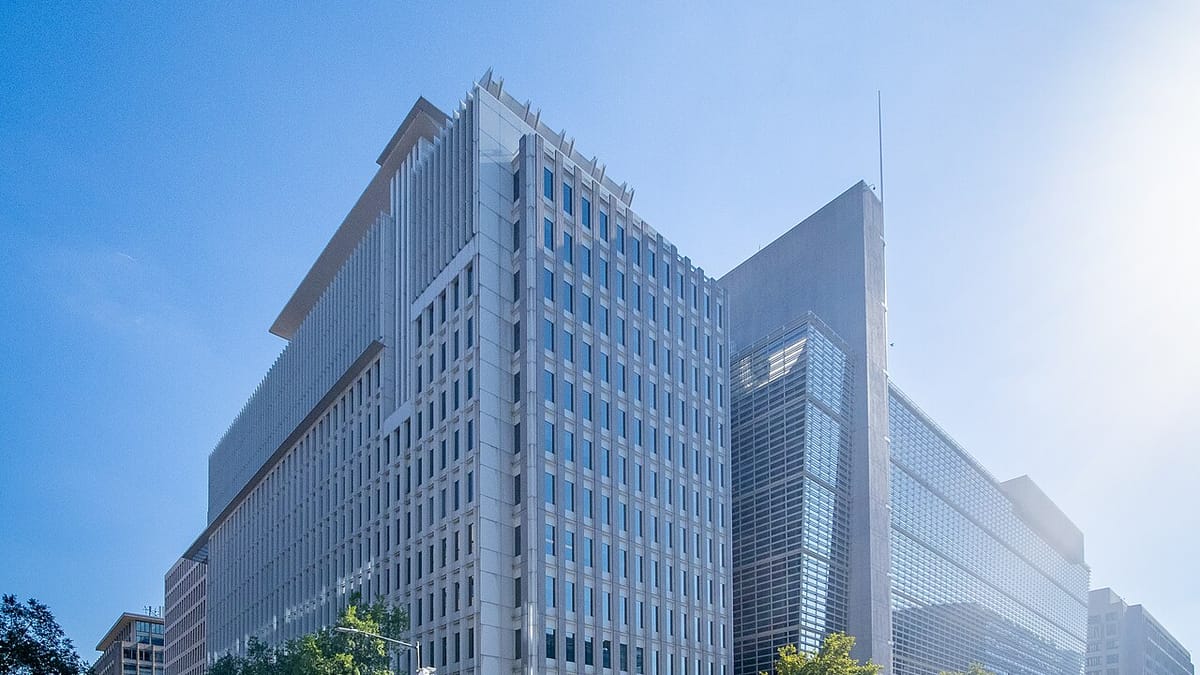
In brief: The World Bank is an international financial institution that provides loans, grants and advice to the governments of low and middle income countries. It was created at the Bretton Woods Conference in 1944, alongside the International Monetary Fund, and is headquartered in Washington, D.C. Its stated goals are to end extreme poverty and promote shared prosperity.
What "World Bank" means
The term usually refers to two institutions: the International Bank for Reconstruction and Development (IBRD), which lends to middle income and creditworthy poorer countries, and the International Development Association (IDA), created in 1960, which gives grants and very low interest loans to the poorest countries. Together with three other bodies, the International Finance Corporation (IFC), the Multilateral Investment Guarantee Agency (MIGA) and the International Centre for Settlement of Investment Disputes (ICSID), they form the World Bank Group.
From reconstruction to development
The IBRD's first loan, in 1947, went to France to help rebuild after the Second World War. As Europe recovered with help from the Marshall Plan, the bank turned its attention to developing countries, financing dams, power plants, roads and later education, health and social protection.
World Bank and IMF: the difference
The IMF focuses on macroeconomic stability and lends to countries facing balance of payments crises, usually for a few years. The World Bank focuses on long-term development and finances specific projects and policy programmes, often over decades.
How it is governed
The bank is owned by its member countries, nearly every country in the world. Voting power is linked to financial contributions, giving the United States the largest single share. By tradition the president of the World Bank has been an American, while the head of the IMF has been a European.
Measuring poverty
The World Bank sets the international poverty line used to count people in extreme poverty. In 2025 it raised the line to 3.00 US dollars a day, measured in 2021 prices adjusted for purchasing power, from the previous 2.15 dollars. Its data on poverty, education and the economy is widely used by researchers and journalists.
The World Bank in Pakistan
Pakistan joined in 1950 and has been one of the larger borrowers. The bank helped broker the Indus Waters Treaty between India and Pakistan in 1960 and financed projects including the Tarbela Dam, as well as programmes in education, health, social protection and flood recovery after 2022.
Criticism
Critics say some bank-funded projects displaced communities or damaged the environment, and that conditions attached to lending in the 1980s and 1990s, known as structural adjustment, hurt the poor. Others argue that developing countries deserve more voting power. The bank has introduced environmental and social safeguards and says it has changed its approach.
Frequently Asked Questions
What is the difference between the World Bank and the IMF?
The World Bank finances long-term development projects and reforms, while the IMF lends to stabilise economies in short-term financial crises.
What is the World Bank's poverty line?
Since 2025 the international poverty line is 3.00 US dollars a day in 2021 purchasing power prices.