What Is the Federal Reserve? How the Fed Sets Interest Rates and Why It Matters
The US central bank's decisions affect mortgages, jobs, stock markets and economies around the world.
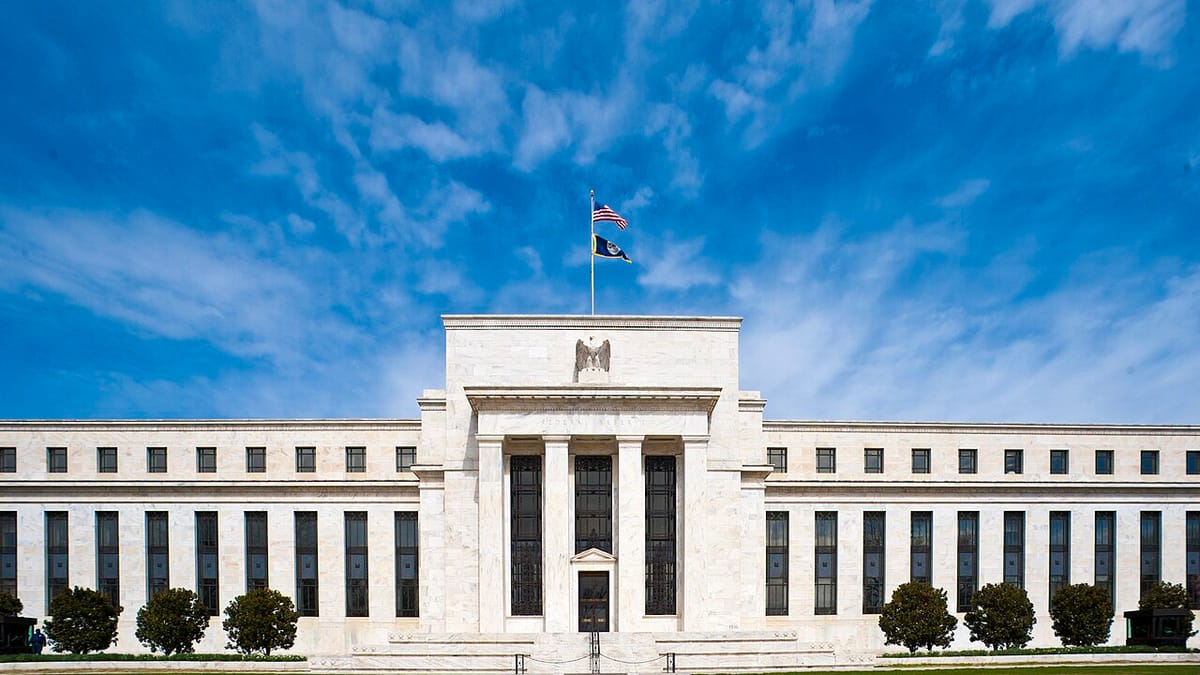
In brief: The Federal Reserve, often called the Fed, is the central bank of the United States. Created by the Federal Reserve Act of 1913, it sets monetary policy, supervises banks, keeps the payments system running and acts as a lender of last resort in crises. Congress has given it a "dual mandate": maximum employment and stable prices. Because the US dollar is the world's main reserve currency, the Fed's decisions affect borrowing costs and markets worldwide.
Why it was created
In the nineteenth and early twentieth centuries, the US suffered repeated banking panics, including a severe one in 1907. In response, Congress passed the Federal Reserve Act, signed by President Woodrow Wilson on December 23, 1913, creating a central bank designed to provide an "elastic" currency and stabilize the financial system.
How it is organized
- The Board of Governors in Washington has seven members appointed by the president and confirmed by the Senate for 14-year terms. The chair serves a four-year term.
- Twelve regional Federal Reserve Banks, in cities including New York, Chicago and San Francisco, supervise banks and gather economic information in their districts.
- The Federal Open Market Committee (FOMC), made up of the seven governors and five regional bank presidents, sets interest rate policy. It meets eight times a year.
How the Fed influences the economy
The Fed's main tool is a target range for the federal funds rate, the interest rate banks charge each other for overnight loans. When the Fed raises rates, borrowing becomes more expensive for businesses and households, which slows spending and helps bring down inflation. When it cuts rates, borrowing becomes cheaper, encouraging spending and hiring. Changes ripple through to mortgage rates, car loans, credit cards and savings accounts.
The Fed also buys or sells government bonds and other securities. During crises it has bought trillions of dollars of assets, a policy known as quantitative easing, to push down long-term interest rates.
The 2 percent target
Since 2012 the Fed has formally targeted inflation of 2 percent a year, measured by the personal consumption expenditures price index. It believes a low, stable rate of inflation is consistent with a healthy economy.
Moments that defined the Fed
- The Great Depression: economists including Milton Friedman and Ben Bernanke have argued that the Fed's failure to prevent bank failures and a collapse in the money supply made the Depression worse.
- The Volcker shock: to end the high inflation of the 1970s, Chair Paul Volcker raised rates to around 20 percent in 1980 and 1981, causing a deep recession but breaking inflation.
- 2008 financial crisis: the Fed cut rates to near zero and launched emergency lending programs and quantitative easing.
- Covid-19 and inflation: the Fed cut rates to zero in 2020, then raised them rapidly in 2022 and 2023 as inflation reached its highest level in about 40 years, before beginning to cut again in 2024.
Independence
The Fed is designed to be independent of day-to-day politics so that it can make unpopular decisions, such as raising rates to fight inflation, without short-term electoral pressure. Presidents have at times publicly criticized Fed chairs, and debates about the limits of the Fed's independence continue.
The Fed and Europe
The European Central Bank, based in Frankfurt and founded in 1998, plays a similar role for the 20 countries that use the euro, but its primary mandate is price stability. The two banks' decisions are closely watched by markets, and differences between them move the euro to dollar exchange rate.
Frequently Asked Questions
What does the Federal Reserve do?
It sets US monetary policy, mainly through interest rates, supervises banks, keeps payments running and acts as lender of last resort.
Why does the Fed raise interest rates?
To slow borrowing and spending when inflation is too high, bringing price increases back toward its 2 percent target.