Rosalind Franklin and the Photograph That Revealed DNA
Her X-ray images were crucial to discovering the double helix. Recognition came late.
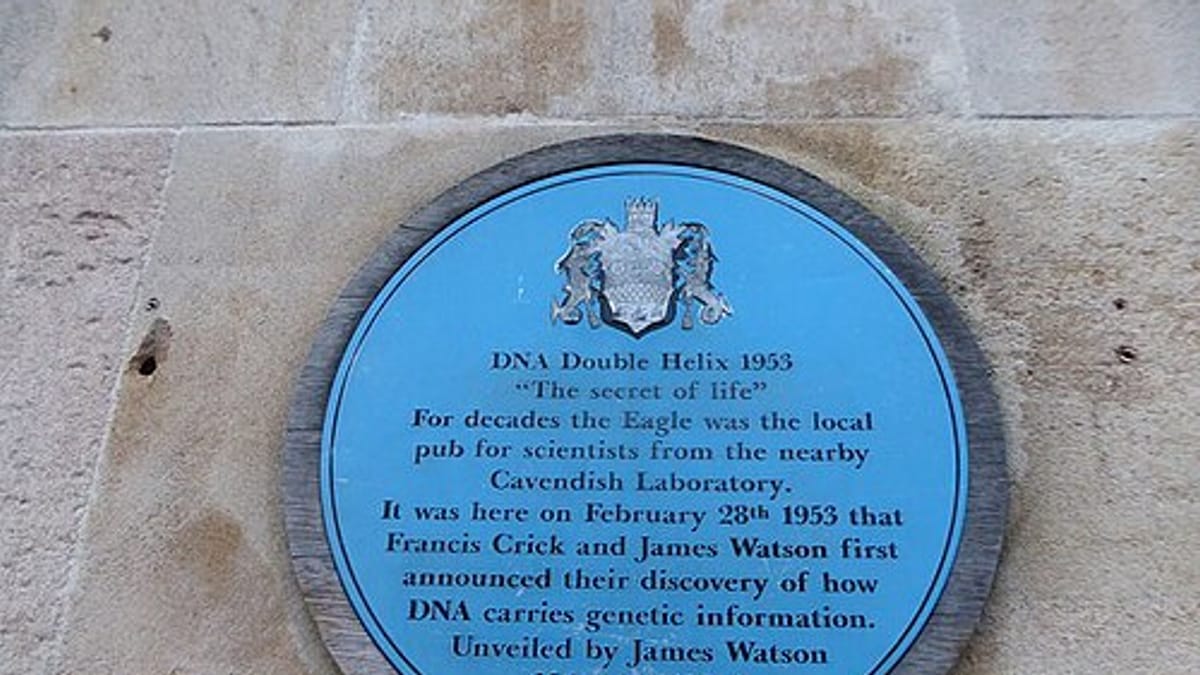
In brief: Rosalind Franklin (1920 to 1958) was a British chemist whose X-ray diffraction images of DNA provided essential evidence for its double helix structure, published by James Watson and Francis Crick in 1953. She also did pioneering work on coal, graphite and viruses.
Early life and training
Franklin was born in London on 25 July 1920 and studied natural sciences at Newnham College, Cambridge. During the Second World War she researched the structure of coal, earning her PhD, and then learned X-ray diffraction techniques in Paris.
DNA at King's College
In 1951 she joined King's College London to study DNA. She produced sharp diffraction images and showed that DNA existed in two forms. In 1952 her student Raymond Gosling took the image known as Photo 51. Her relationship with colleague Maurice Wilkins was difficult. Without her knowledge, Wilkins showed Photo 51 to Watson, and data from her research report reached Watson and Crick through a Medical Research Council report.
The double helix
Watson and Crick published their model in Nature in April 1953, alongside papers by Wilkins's group and by Franklin and Gosling. Watson, Crick and Wilkins received the 1962 Nobel Prize. Franklin had died of ovarian cancer on 16 April 1958, aged 37.
Later work and recognition
At Birkbeck College she led important research on the structure of the tobacco mosaic virus and the polio virus. Her role in the DNA discovery is now widely recognised, and many institutions, including a Mars rover planned by the European Space Agency, bear her name.
Frequently Asked Questions
What is Photo 51?
An X-ray diffraction image of DNA taken in 1952 in Rosalind Franklin's laboratory by her student Raymond Gosling, which showed DNA's helical structure.
Why did Franklin not share the Nobel Prize?
She died in 1958. Nobel Prizes are not awarded posthumously, and the 1962 prize went to Watson, Crick and Wilkins.