Katherine Johnson: The NASA Mathematician Who Sent Astronauts to Space
Her calculations guided America's first orbital flight and the Moon landing.
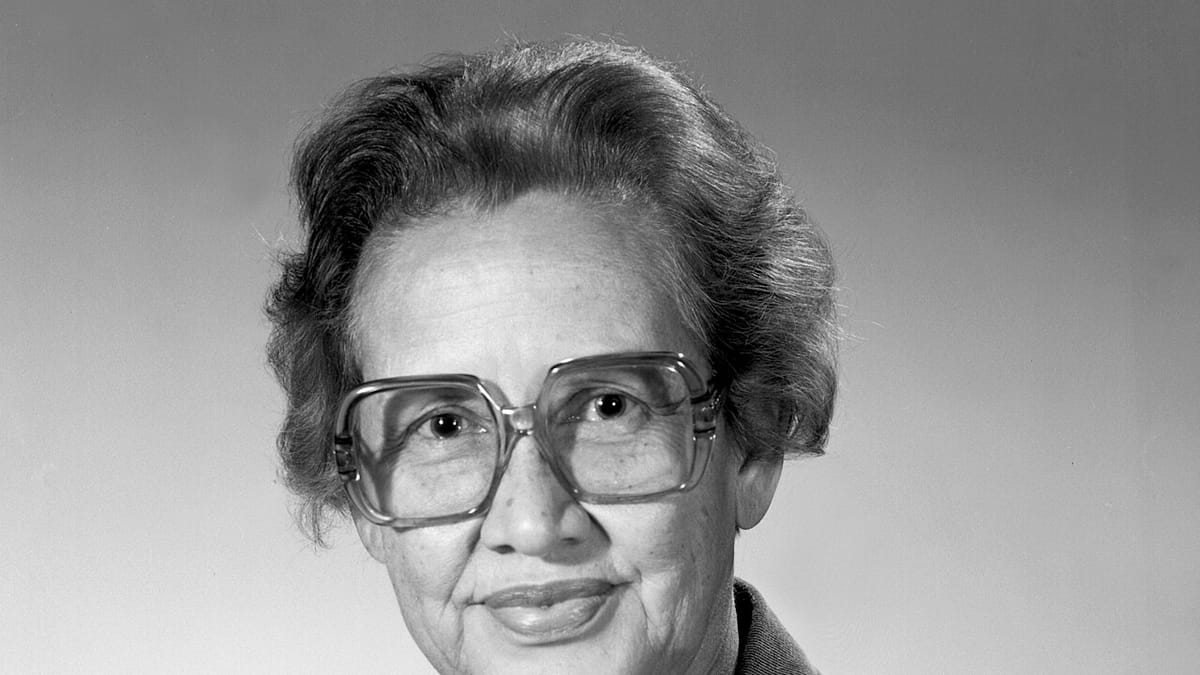
In brief: Katherine Johnson (1918 to 2020) was an African American mathematician whose calculations of orbital mechanics were critical to NASA's first crewed spaceflights, including John Glenn's 1962 orbit of Earth and the Apollo 11 Moon landing. Her story reached a wide audience through the 2016 film Hidden Figures.
A gifted child
Katherine Coleman was born on 26 August 1918 in White Sulphur Springs, West Virginia. Her talent for numbers was obvious early, and she graduated from high school at 14 and from West Virginia State College at 18, with degrees in mathematics and French. In 1939 she was one of the first Black students to integrate graduate school at West Virginia University.
A "human computer"
In 1953 she joined the National Advisory Committee for Aeronautics (NACA), NASA's predecessor, at Langley in Virginia, working in a segregated unit of Black women mathematicians known as "computers". She soon moved to the Flight Research Division, where her skill in analytic geometry earned her a place on the space programme.
Spaceflight
She calculated the trajectory for Alan Shepard's 1961 flight, the first by an American in space. For John Glenn's orbital mission in 1962, Glenn reportedly insisted that she check the computer's numbers before he would fly. She later worked on calculations for Apollo 11 and the Space Shuttle.
Recognition
In 2015 President Barack Obama awarded her the Presidential Medal of Freedom. She died on 24 February 2020, aged 101.
Frequently Asked Questions
What did Katherine Johnson do for John Glenn?
Before his 1962 orbital flight, Glenn asked that she personally verify the electronic computer's trajectory calculations.
Which film tells her story?
The 2016 film Hidden Figures, based on Margot Lee Shetterly's book.