Mahatma Gandhi: The Power of Nonviolent Resistance
How a lawyer in South Africa developed satyagraha and helped end British rule in India.
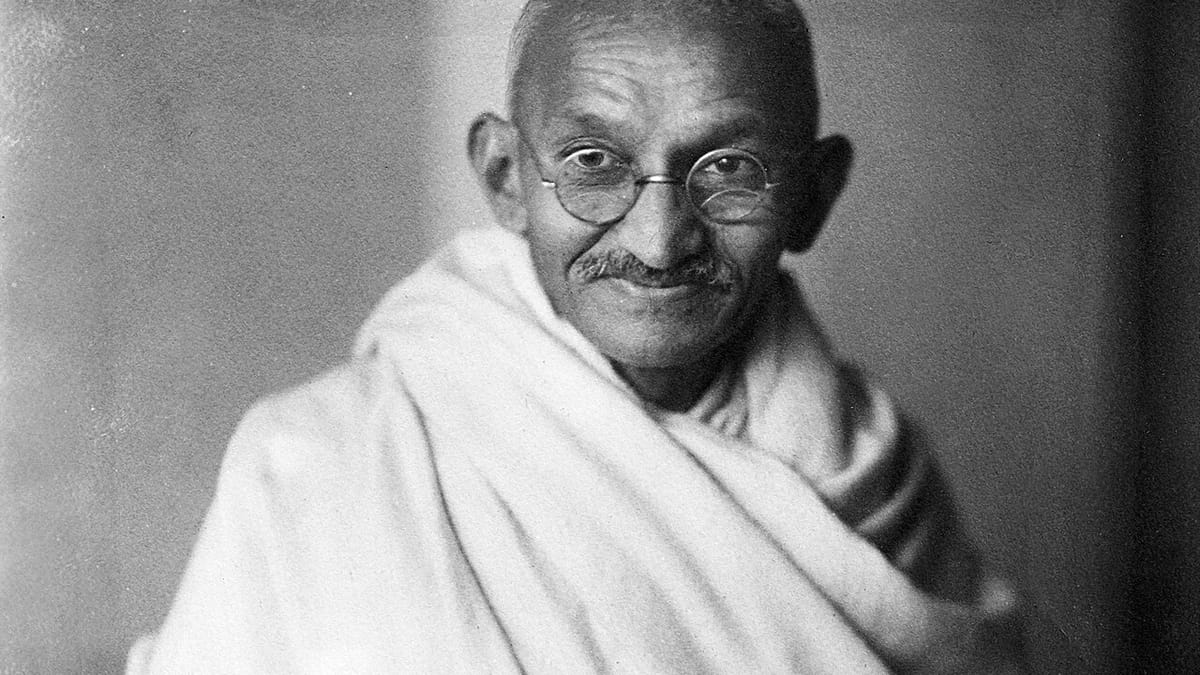
In brief: Mohandas Karamchand Gandhi (1869 to 1948), known as Mahatma ("great soul"), led the campaign for India's independence from British rule using nonviolent civil disobedience. His methods influenced Martin Luther King Jr., Nelson Mandela and movements around the world.
Early life and South Africa
Gandhi was born on 2 October 1869 in Porbandar, in present-day Gujarat. He studied law in London and in 1893 went to South Africa to work for an Indian firm. There, after being thrown off a first class train compartment because of his race, he began organising the Indian community against discrimination. Over two decades he developed satyagraha, a philosophy of resisting injustice through nonviolent action and willingness to suffer.
Leading India's struggle
Gandhi returned to India in 1915 and became the leading figure of the Indian National Congress. He led the Non-Cooperation Movement of 1920 to 1922, encouraged spinning homespun cloth (khadi) as a symbol of self-reliance, and campaigned against untouchability. In 1930 he led the Salt March, walking about 390 kilometres to the sea at Dandi to make salt in defiance of the British salt tax. In 1942 he launched the Quit India Movement and was imprisoned with much of the Congress leadership.
Independence and partition
India became independent on 15 August 1947, but was partitioned to create Pakistan. Gandhi opposed partition and spent the period of independence trying to stop communal violence, including through fasts. On 30 January 1948 he was assassinated in Delhi by Nathuram Godse, who blamed him for being too accommodating to Muslims and Pakistan.
Legacy and debate
His birthday, 2 October, is observed by the United Nations as the International Day of Non-Violence. Historians also discuss criticisms, including his early views on race in South Africa and his positions on caste, which were challenged by B. R. Ambedkar. Both his achievements and these debates are part of understanding his life.
Frequently Asked Questions
What is satyagraha?
Satyagraha, often translated as truth force, was Gandhi's method of nonviolent resistance to injustice.
How did Gandhi die?
He was shot dead in Delhi on 30 January 1948 by Nathuram Godse, a Hindu nationalist.