Benazir Bhutto: The Life of the First Woman to Lead a Muslim-Majority Nation
From Oxford debating halls to prison, exile, two terms as prime minister and assassination: a life that shaped modern Pakistan.
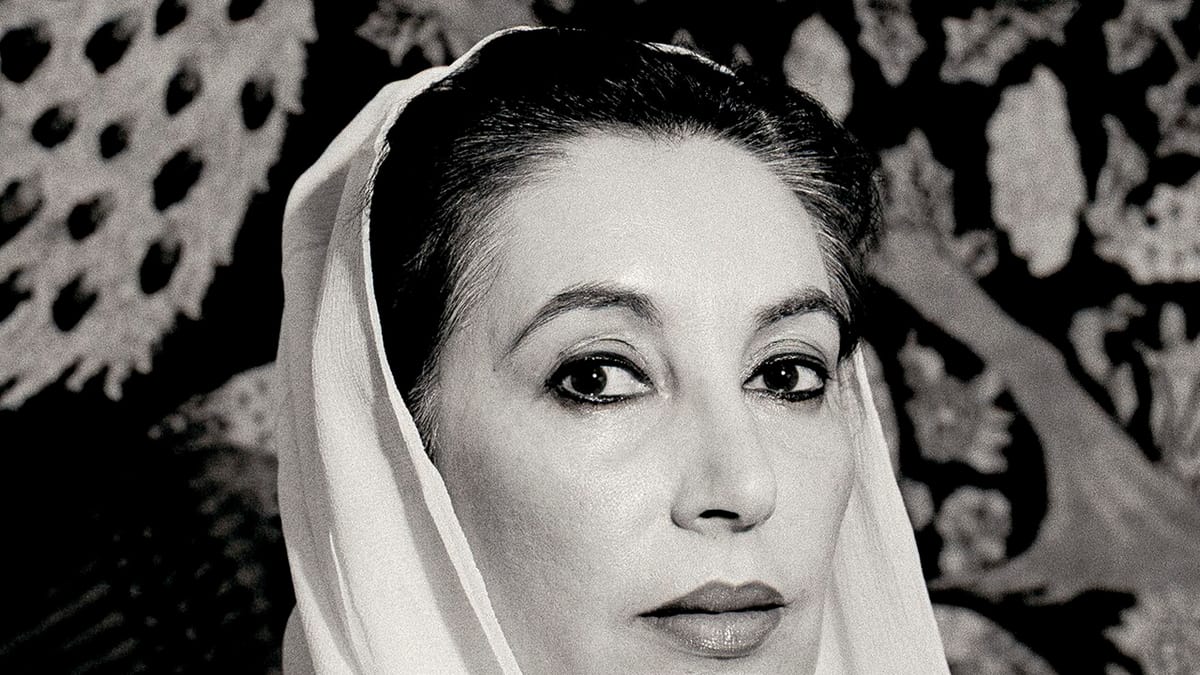
In brief: Benazir Bhutto (1953 to 2007) was twice prime minister of Pakistan and the first woman elected to lead a government in a Muslim-majority country. Daughter of former prime minister Zulfikar Ali Bhutto, she spent years in detention and exile under military rule, led the Pakistan Peoples Party (PPP), and was assassinated at a rally in Rawalpindi on 27 December 2007, weeks after returning home to contest elections.
Early life and education
Benazir Bhutto was born in Karachi on 21 June 1953, the eldest child of Zulfikar Ali Bhutto, a landowning politician from Sindh who would found the PPP in 1967 and later serve as president and prime minister, and Nusrat Bhutto. She grew up in a political household where world leaders were discussed at the dinner table.
She studied at Radcliffe College, Harvard University, graduating in 1973, and then read Philosophy, Politics and Economics at Lady Margaret Hall, Oxford. In 1977 she was elected president of the Oxford Union, the university's famous debating society, becoming the first Asian woman to hold the post.
A family destroyed by military rule
Weeks after she returned to Pakistan in 1977, General Muhammad Zia ul Haq overthrew her father's government in a coup. Zulfikar Ali Bhutto was tried for authorising the murder of a political opponent, convicted in a trial his supporters and many legal scholars regard as deeply flawed, and hanged on 4 April 1979.
Benazir and her mother were held repeatedly in detention over the following years, including long periods of solitary confinement. In 1984 she was allowed to leave for medical treatment and lived in exile in London, where she reorganised the PPP from abroad.
Return and first premiership (1988 to 1990)
Bhutto returned to Pakistan in April 1986 to vast crowds in Lahore. In 1987 she married Asif Ali Zardari. After General Zia died in a plane crash in August 1988, elections were held that November. The PPP won the most seats, and on 2 December 1988, at the age of 35, Benazir Bhutto was sworn in as prime minister.
Her government faced a hostile military establishment, a powerful president and a fragile coalition. In August 1990 President Ghulam Ishaq Khan dismissed it using constitutional powers, citing corruption and misgovernance, charges Bhutto rejected as politically motivated.
Second premiership (1993 to 1996)
The PPP returned to power after the 1993 election and Bhutto became prime minister again in October 1993. Her second term saw an emphasis on women's issues, including the creation of women's police stations, alongside serious violence in Karachi and persistent corruption allegations against her government and her husband. In November 1996 President Farooq Leghari, a former PPP colleague, dismissed her government.
Exile and corruption cases
Corruption cases were brought against Bhutto and Zardari in Pakistan and abroad. Zardari spent years in prison, and Bhutto left Pakistan in 1999, living mainly in Dubai and London. She maintained that the cases were politically driven. After General Pervez Musharraf took power in 1999, she remained in exile while leading the PPP from abroad.
Return and assassination (2007)
In 2007, after negotiations with the Musharraf government that led to the withdrawal of many cases against her, Bhutto returned to Karachi on 18 October to contest elections. Her homecoming procession was attacked by suicide bombers; more than 130 people were killed, though she survived.
On 27 December 2007, after addressing a rally at Liaquat Bagh in Rawalpindi, she was killed in a gun and suicide bomb attack as she left in her vehicle. A United Nations commission of inquiry reported in 2010 that her death could have been prevented had adequate security measures been taken. Responsibility for the killing remains disputed.
Legacy
Bhutto's assassination transformed Pakistani politics. The PPP won the February 2008 elections, and Asif Ali Zardari became president. Their son Bilawal Bhutto Zardari went on to lead the party, and their daughter Aseefa Bhutto Zardari became First Lady when Zardari returned to the presidency.
For many women in Pakistan and across the Muslim world, Bhutto's rise proved that a woman could lead a nation. Critics point to the corruption allegations and to the limited structural reform achieved under her governments. Both views belong to an honest account of a leader whose life mirrored her country's long struggle between democracy and military rule.
Timeline
- 21 June 1953: Born in Karachi
- 1973: Graduates from Radcliffe College, Harvard
- 1977: Elected president of the Oxford Union; her father is overthrown in a coup
- 4 April 1979: Zulfikar Ali Bhutto is executed
- 1984 to 1986: Exile in London
- 2 December 1988: Becomes prime minister
- August 1990: Government dismissed
- October 1993: Second term as prime minister
- November 1996: Government dismissed again
- 18 October 2007: Returns to Pakistan; procession bombed
- 27 December 2007: Assassinated in Rawalpindi
Her autobiography, Daughter of the East (published in the United States as Daughter of Destiny), appeared in 1988. Reconciliation: Islam, Democracy, and the West was published after her death in 2008.
Frequently Asked Questions
Was Benazir Bhutto the first female prime minister of a Muslim country?
Yes. When she took office on 2 December 1988 she became the first woman elected to head the government of a Muslim-majority country.
How many times was Benazir Bhutto prime minister?
Twice: from 1988 to 1990 and from 1993 to 1996. Both governments were dismissed by the president before completing their terms.
How did Benazir Bhutto die?
She was killed in a gun and suicide bomb attack after a rally in Rawalpindi on 27 December 2007. A 2010 UN commission found her death could have been prevented with adequate security. Responsibility remains disputed.
Sources and References
- Benazir Bhutto, Wikipedia (overview and further reading)
- Benazir Bhutto: biography, Encyclopaedia Britannica