Martin Luther King Jr.: The Life of America's Great Advocate of Nonviolence
From a Montgomery pulpit to the Lincoln Memorial, the minister who led the civil rights movement.
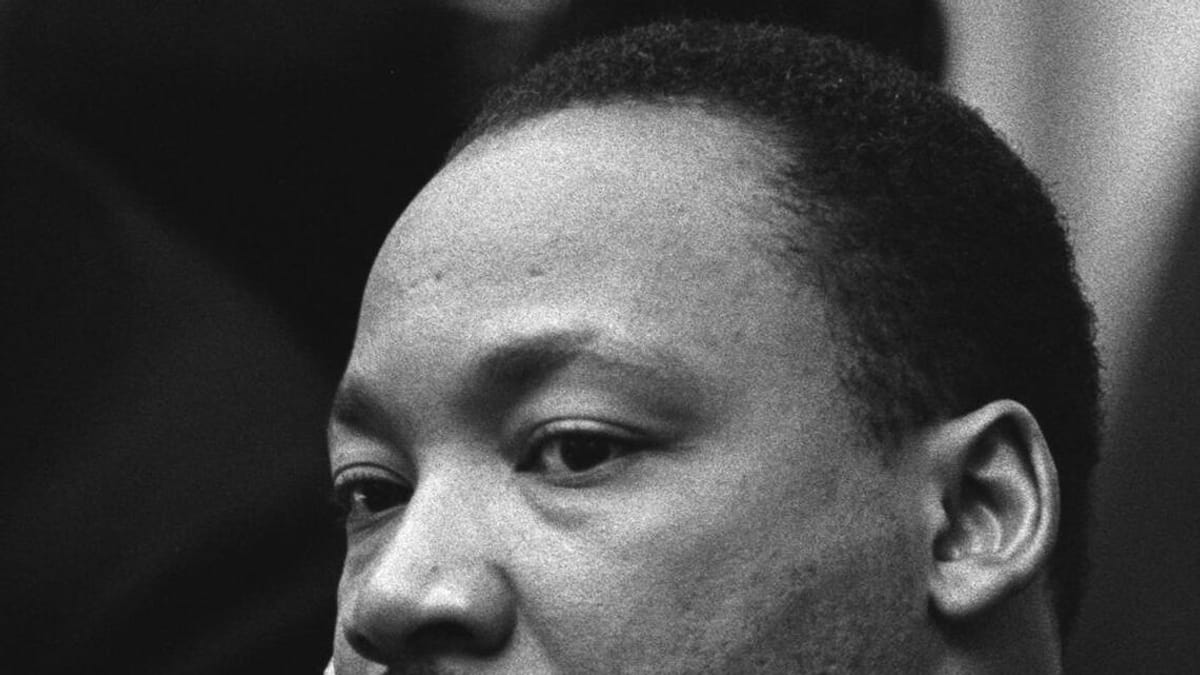
In brief: Martin Luther King Jr. (1929 to 1968) was an American Baptist minister and the most prominent leader of the civil rights movement. He led the Montgomery bus boycott, co-founded the Southern Christian Leadership Conference, delivered the "I Have a Dream" speech at the March on Washington in 1963 and received the Nobel Peace Prize in 1964. He was assassinated in Memphis, Tennessee, on April 4, 1968.
Early life
King was born in Atlanta, Georgia, on January 15, 1929, the son and grandson of Baptist preachers. He grew up under segregation, entered Morehouse College at 15 and later studied at Crozer Theological Seminary in Pennsylvania, where he read about Mahatma Gandhi's nonviolent resistance. He earned a doctorate in systematic theology from Boston University in 1955. In Boston he met Coretta Scott, a music student, whom he married in 1953.
Montgomery
In 1954 King became pastor of Dexter Avenue Baptist Church in Montgomery, Alabama. When Rosa Parks was arrested in December 1955 for refusing to give up her bus seat, local leaders formed the Montgomery Improvement Association and chose the 26-year-old King as its president. The boycott lasted 381 days, his home was bombed, and he was arrested, but it ended in victory when the Supreme Court upheld a ruling that bus segregation was unconstitutional.
National leader
In 1957 King helped found the Southern Christian Leadership Conference (SCLC). He was arrested many times. Jailed during protests in Birmingham in 1963, he wrote the "Letter from Birmingham Jail", answering white clergymen who had urged patience: "Injustice anywhere is a threat to justice everywhere." On August 28, 1963, he addressed about 250,000 people at the March on Washington, describing his dream of a nation where his children "will not be judged by the color of their skin but by the content of their character".
Nobel Prize and voting rights
In 1964, at 35, King became the youngest person at that time to receive the Nobel Peace Prize, and he donated the prize money to the movement. In 1965 he helped lead the Selma to Montgomery marches, which built support for the Voting Rights Act signed that August.
Wider struggles
In his final years King spoke out against poverty and the Vietnam War, which cost him support among some allies and the White House. He was organizing a Poor People's Campaign for economic justice when he went to Memphis to support striking Black sanitation workers.
Assassination
On April 4, 1968, King was shot on the balcony of the Lorraine Motel in Memphis. James Earl Ray pleaded guilty and was sentenced to 99 years. King's death set off grief and unrest across the country. He was 39.
Legacy
Martin Luther King Jr. Day became a federal holiday in 1986, and the Martin Luther King Jr. Memorial opened in Washington, D.C., in 2011. Coretta Scott King continued his work for decades. His philosophy of nonviolent resistance continues to influence movements for justice around the world.
Frequently Asked Questions
When did Martin Luther King Jr. give the I Have a Dream speech?
On August 28, 1963, at the March on Washington for Jobs and Freedom.
How old was Martin Luther King Jr. when he died?
He was 39 when he was assassinated on April 4, 1968.