Study & LearningHow-To
How to Take Better Notes With the Cornell Method
A simple page layout that turns notes into a study tool.
This guide is general information. For medical, legal, financial or safety decisions, consult a qualified professional.
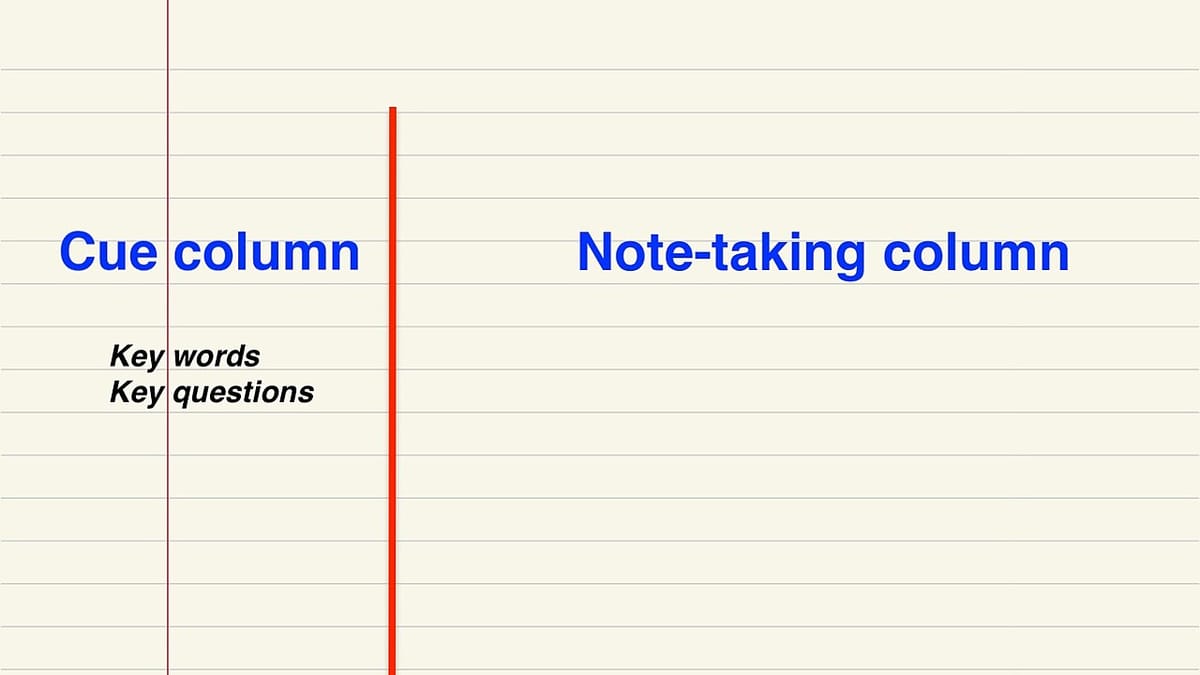
In brief: The Cornell note-taking system was developed by Walter Pauk, an education professor at Cornell University, in the 1950s. Its layout encourages you to summarize and quiz yourself rather than copy passively.
Steps
- Divide your page. Draw a vertical line about a third of the way from the left, and a horizontal line a few inches from the bottom.
- Take notes on the right. During class or reading, write key ideas, examples and diagrams in the large right column. Use abbreviations and short phrases.
- Add cues on the left. Soon after, write questions or keywords in the left column that match the notes.
- Write a summary at the bottom. Summarize the page in two or three sentences in your own words.
- Review by covering. Cover the right column and use the cues to recall the information.
- Review regularly. Go over your notes within 24 hours and again over the following weeks.
Tips
- Handwriting notes can help some people process information, but the review habit matters most.
Frequently Asked Questions
Does the Cornell method work digitally?
Yes. Many note-taking apps offer Cornell templates, or you can use a simple table.