Harriet Tubman: Escaped Slave, Liberator and Spy
She freed herself, then returned again and again to lead others to freedom.
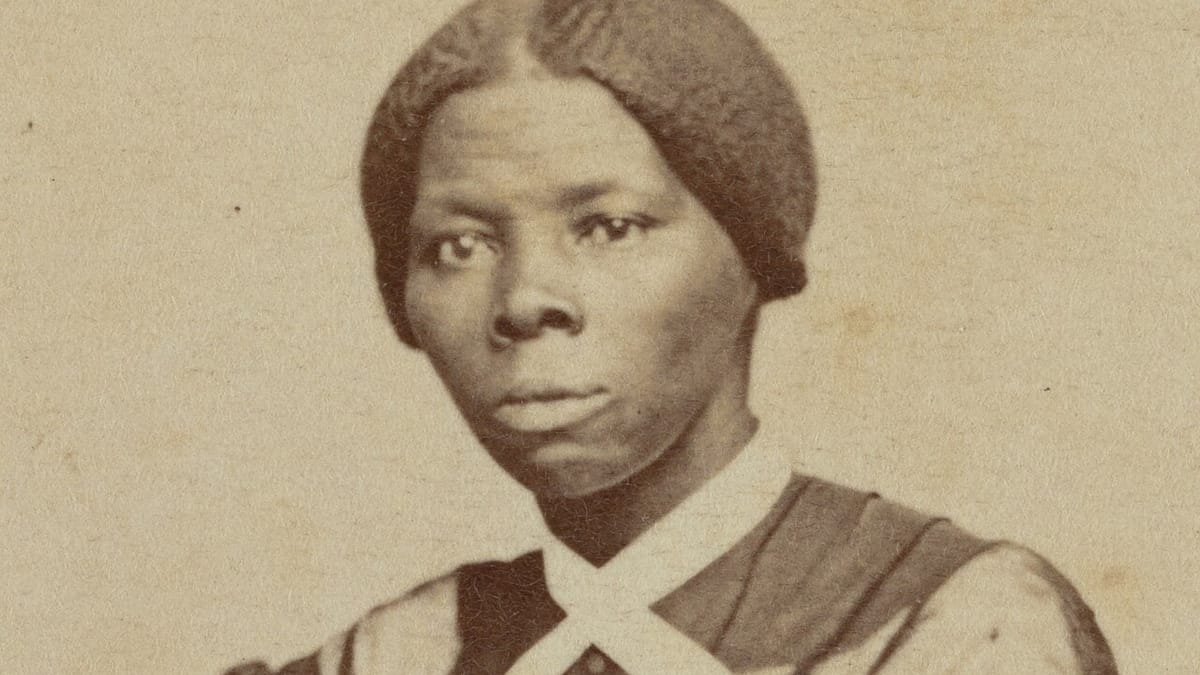
In brief: Harriet Tubman (about 1822 to 1913) was born into slavery in Maryland, escaped in 1849, and returned about 13 times to lead roughly 70 enslaved people to freedom. During the Civil War she served the Union army as a scout and spy and helped lead a raid that freed more than 700 people.
Born into slavery
Araminta Ross was born in Dorchester County, Maryland, around 1822. As a child she suffered a severe head injury when an overseer threw a heavy weight, causing lifelong seizures and visions. She later took the name Harriet and married John Tubman, a free Black man.
Escape and the Underground Railroad
In 1849 she escaped to Philadelphia. Over the next decade she made repeated dangerous journeys back to Maryland, guiding family members and others north along the Underground Railroad, often at night. After the Fugitive Slave Act of 1850 made it easier to capture escaped people in the North, she led them to Canada. She later said she "never lost a passenger".
The Civil War
During the war she worked as a nurse, scout and spy for the Union. In June 1863 she helped guide the Combahee River Raid in South Carolina, which freed more than 700 enslaved people, making her one of the first women to lead an armed operation in the war.
Later life
She settled in Auburn, New York, cared for elderly people and supported women's suffrage. She died on 10 March 1913.
Frequently Asked Questions
What was the Underground Railroad?
A secret network of routes and safe houses used by enslaved people in the United States to escape to free states and Canada.