Angela Merkel: The Scientist Who Led Germany Through 16 Years of Crises
From East German physicist to Europe's most powerful leader, and the debates over her legacy.
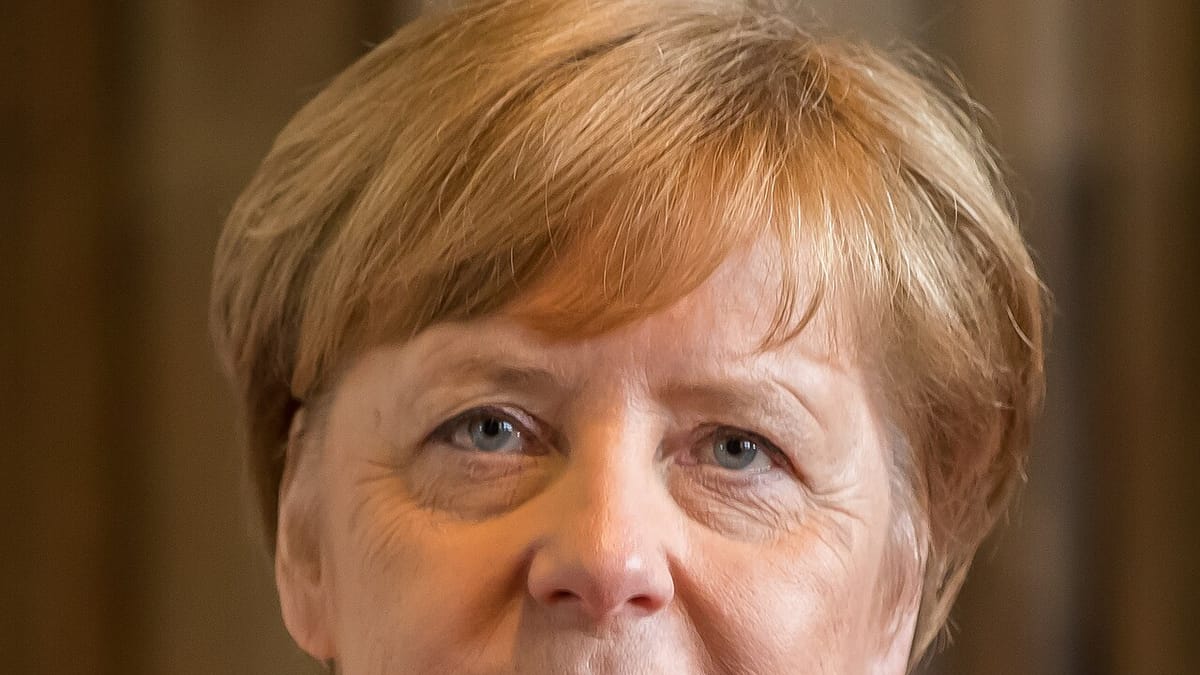
In brief: Angela Merkel (born 1954) is a German politician and former research scientist who served as Chancellor of Germany from November 2005 to December 2021, the first woman to hold the office. Raised in communist East Germany, she entered politics after the fall of the Berlin Wall and led the center-right Christian Democratic Union (CDU) for 18 years. She steered Germany and Europe through the global financial crisis, the euro crisis, the 2015 refugee crisis and the Covid-19 pandemic.
Early life in East Germany
Angela Dorothea Kasner was born in Hamburg, West Germany, on July 17, 1954. Weeks later her family moved to East Germany, where her father, a Lutheran pastor, took up a parish. She excelled in mathematics and Russian, studied physics at the University of Leipzig and earned a doctorate in quantum chemistry in 1986 while working at the Academy of Sciences in East Berlin. She kept her first husband's surname, Merkel, after their divorce, and later married the chemist Joachim Sauer.
Into politics
After the Berlin Wall fell in 1989, she joined a new pro-democracy party, Democratic Awakening, which merged with the CDU. She was elected to the Bundestag in the first all-German election in 1990. Chancellor Helmut Kohl, who called her his "girl", appointed her minister for women and youth in 1991 and minister for the environment in 1994. In 1999, when Kohl was caught up in a party financing scandal, she publicly called on the party to move on without him. She became CDU leader in 2000.
Chancellor
After the 2005 election, she formed a grand coalition with the Social Democrats and became chancellor. She would win four elections. Known for a cautious, pragmatic and consensus-seeking style, she was nicknamed "Mutti" (mother) in Germany.
The crises
- Financial and euro crises: after 2008 she guaranteed German savings and, during the euro crisis, backed bailouts for Greece and other countries in exchange for strict austerity, which made her a hero to some and a villain to others, especially in southern Europe.
- Energy: after the Fukushima nuclear disaster in Japan in 2011, she reversed course and decided to phase out nuclear power in Germany.
- Refugees: in 2015, as hundreds of thousands of people fleeing war in Syria and elsewhere arrived in Europe, she kept Germany's borders open, declaring "Wir schaffen das" (we can do this). More than a million asylum seekers arrived in 2015 and 2016. The decision won international praise but divided Germans and contributed to the rise of the far-right Alternative for Germany party.
- Russia: she helped negotiate the Minsk agreements after Russia's annexation of Crimea in 2014 and backed EU sanctions, while supporting the Nord Stream 2 gas pipeline.
- Covid-19: her calm, science-based communication early in the pandemic was widely praised.
Legacy
Merkel did not seek a fifth term and left office in December 2021. For years she was regarded as the de facto leader of Europe and, after 2016, by some as a defender of the liberal international order. Since Russia's full-scale invasion of Ukraine in 2022, her legacy has been reassessed, with critics arguing that her government made Germany too dependent on Russian gas and underinvested in defense and digital infrastructure. Her memoir, Freedom, published in 2024, defended her record.
Frequently Asked Questions
How long was Angela Merkel chancellor?
Sixteen years, from November 2005 to December 2021.
Where did Angela Merkel grow up?
In East Germany. She was born in Hamburg but her family moved east when she was a baby.