The US Constitution Explained: How America's Founding Document Works
Seven articles and 27 amendments that divide power, protect rights and have governed the United States since 1789.
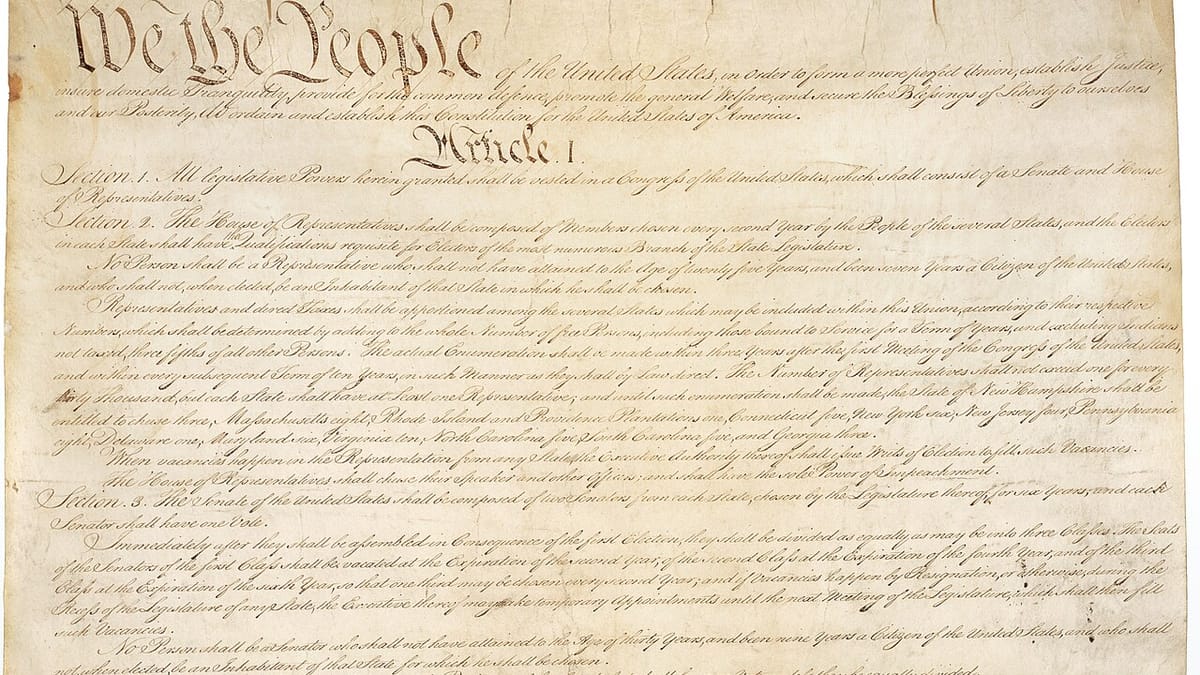
In brief: The Constitution of the United States is the supreme law of the country. It was drafted at the Constitutional Convention in Philadelphia, signed on September 17, 1787, and took effect in 1789. It creates three branches of government, divides power between the federal government and the states, and, through its amendments, protects individual rights. It is the oldest written national constitution still in force.
Why it was written
After independence, the 13 states were governed under the Articles of Confederation, ratified in 1781. The national government was weak: it could not tax, regulate trade between states or raise an army effectively. Uprisings such as Shays' Rebellion in Massachusetts in 1786 and 1787 convinced many leaders that a stronger system was needed. Delegates met in Philadelphia in May 1787, with George Washington presiding and James Madison playing a central role in the design.
The big compromises
- The Great Compromise created a two-chamber Congress: the House of Representatives, with seats based on population, and the Senate, with two senators from every state.
- The Three-Fifths Compromise counted three-fifths of enslaved people for representation and taxation, a deal that strengthened slaveholding states and left slavery untouched until the 13th Amendment abolished it in 1865.
- The Electoral College was chosen as the method for electing the president.
How power is divided
- Article I: Congress makes laws, sets taxes, declares war and approves the budget.
- Article II: The President enforces the laws, commands the armed forces, conducts foreign policy and appoints officials and judges with the Senate's consent.
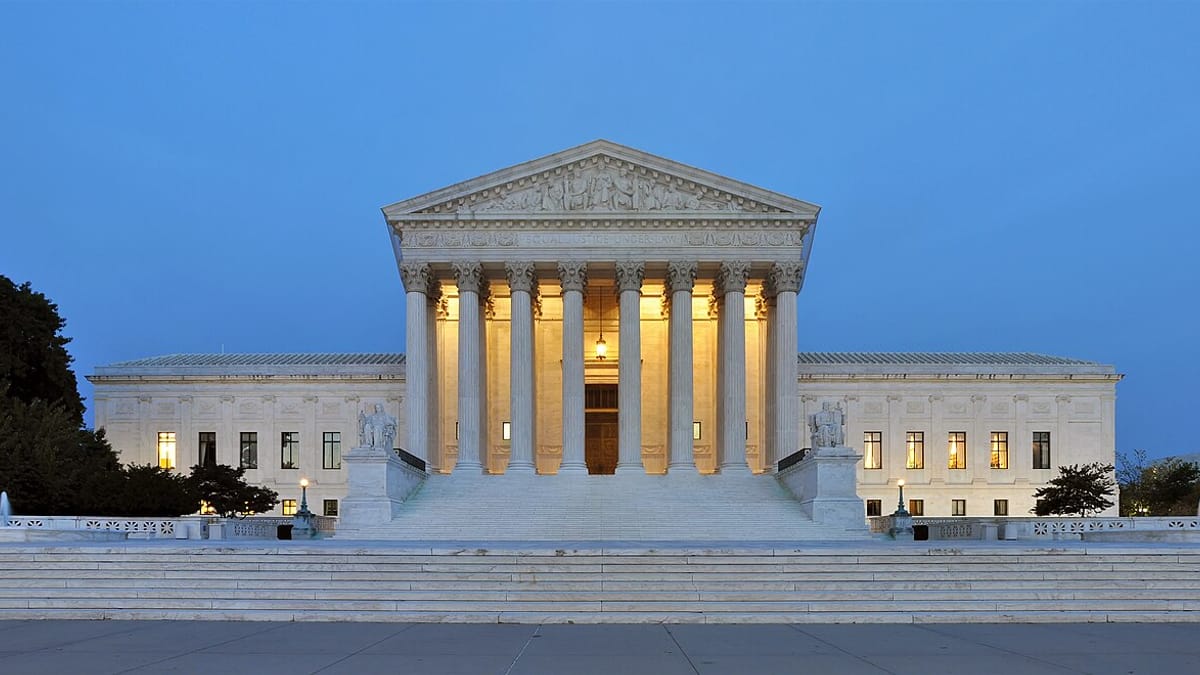
- Article III: The courts, led by the Supreme Court, decide cases under federal law and the Constitution.
Each branch can limit the others. The president can veto bills, Congress can override a veto with a two-thirds vote in both chambers and can impeach and remove officials, and courts can strike down laws that conflict with the Constitution, a power established in Marbury v. Madison in 1803.
Federalism
The Constitution gives specific powers to the federal government and, under the 10th Amendment, reserves the rest to the states or the people. This is why states set many of their own laws on education, policing, marriage and elections.
How it is amended
Under Article V, an amendment usually needs a two-thirds vote in both the House and the Senate and ratification by three-quarters of the states, currently 38 of 50. This high bar explains why there have been only 27 amendments. The first ten, the Bill of Rights, were ratified in 1791. Others abolished slavery (13th), guaranteed equal protection of the laws (14th), protected voting regardless of race (15th) and sex (19th), and lowered the voting age to 18 (26th). The most recent, the 27th, on congressional pay, was proposed in 1789 and ratified in 1992.
Ratification
The Constitution needed approval by nine states. Supporters, the Federalists, argued for it in essays now known as The Federalist Papers, written by Alexander Hamilton, James Madison and John Jay. Opponents, the Anti-Federalists, feared a powerful central government without guarantees of individual liberty, which led to the promise of a Bill of Rights. New Hampshire became the ninth state to ratify in June 1788.
A living debate
Americans still argue about how to read the Constitution. Some judges favor "originalism", interpreting the text as it was understood when adopted. Others see it as a framework whose broad principles apply to new circumstances. Those debates shape decisions on issues from gun rights to abortion to presidential power.
Frequently Asked Questions
When was the US Constitution signed?
On September 17, 1787, in Philadelphia. It took effect in 1789.
How many amendments does the US Constitution have?
Twenty-seven. The first ten are known as the Bill of Rights.
How is the Constitution amended?
Usually by a two-thirds vote in both houses of Congress followed by ratification by three-quarters of the states.