The Chalk Girl of Karimabad
A short story about a teacher, a mountain village and the lesson she did not expect to learn.
This is an original work of fiction. Names, characters and events are imagined.
This is an original work of fiction. The characters and events are imagined.
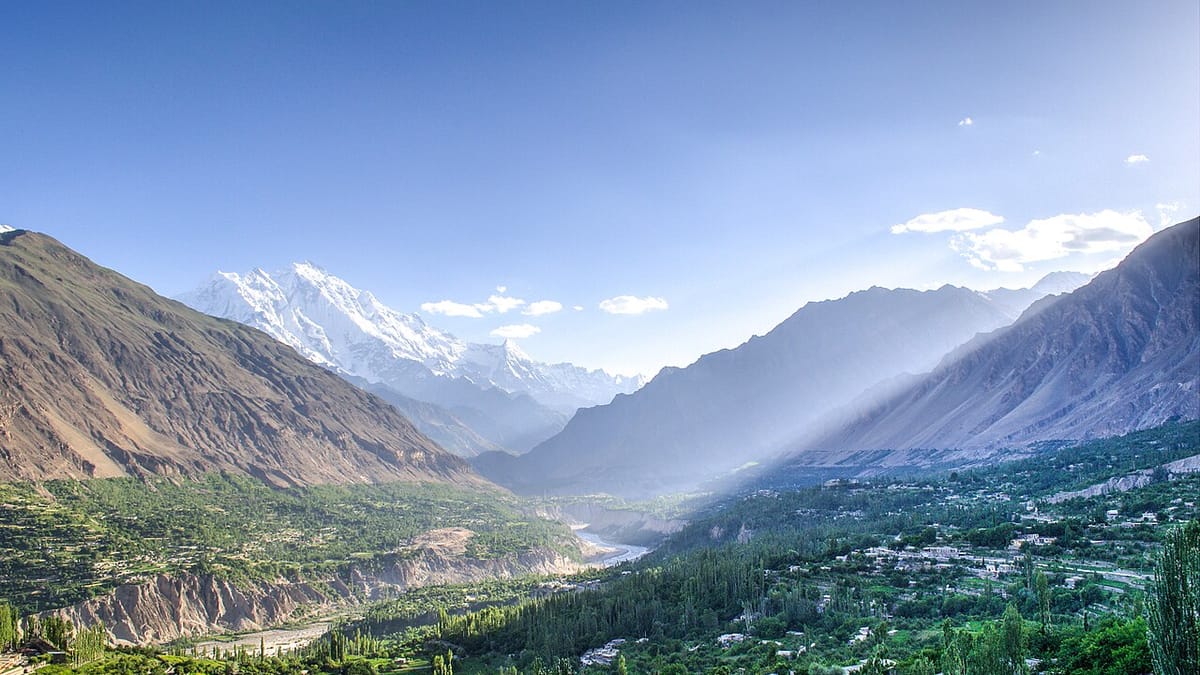
The road to Karimabad ended where the river began to argue with the mountain, and Nargis walked the last hour with her suitcase balanced on her head the way her grandmother had once carried water.
The school was a single room with a tin roof and a blackboard so worn that the old lessons showed through like ghosts. There were no books. There were eleven children, a box of chalk and a window that looked straight at a glacier.
"You will last until the snow," the shopkeeper told her, not unkindly. "The last teacher lasted until the snow."
On the first morning she wrote the alphabet across the board and turned to find ten children copying it into their notebooks and one girl copying nothing at all. The girl sat by the window with her chin in her hands, watching the glacier.
"What is your name?"
"Zarmina."
"Why are you not writing, Zarmina?"
"Because I know those letters. I want to know why the ice is blue."
Nargis did not know why the ice was blue. She had a degree in English literature from a university in the city, a certificate in teaching methods, and a suitcase full of novels, and none of them explained the colour of ice.
That night, under a single bulb that flickered whenever the wind changed, she wrote a letter to her old professor asking for a book about glaciers. Then she tore it up, because the post came once a month and Zarmina would not wait a month for anything.
The next morning she took the class outside.
They walked to the edge of the river, where the water ran grey with ground stone. Nargis asked the children what they saw. One boy said the water was dirty. Another said it was cold. Zarmina said, "It is the mountain, coming down slowly."
"How do you know?"
"My father says the glacier is a river that forgot how to hurry."
They spent the week asking questions they could not answer and writing them on the blackboard until there was no room left. Why is the ice blue. Why does the river grow louder in summer. Why do the apricot trees bloom before the walnut trees. Why did the last teacher leave.
Nargis copied every question into a notebook. When the post came she sent the notebook, not a letter, to her professor.
The reply took two months and arrived in a box too heavy for the post rider, who dropped it at the shop with a curse. Inside were six books, a magnifying glass and a note in her professor's careful hand: A teacher who sends questions instead of answers will always have students. Tell the girl the ice is blue because it swallows the red light and keeps it.
Nargis read the note aloud to the class. Zarmina listened with her whole body, then walked to the blackboard, took the chalk and wrote, under all the other questions, a new one:
What else swallows the light and keeps it?
The snow came in November. Nargis stayed. In the spring, the shopkeeper's son enrolled, and then two girls from the next village, who walked an hour each way. The blackboard never stayed clean for long.
Years later, when people asked Nargis how she had taught in a school with no books, she would say that the books came later. First, there was a girl who would not copy the alphabet, and a window that looked at the ice.