The Indus Waters Treaty Explained
How India and Pakistan shared six rivers for six decades, and why the treaty is now under strain.
In brief: The Indus Waters Treaty, signed in Karachi on 19 September 1960 by Indian Prime Minister Jawaharlal Nehru and Pakistani President Ayub Khan, with the World Bank as a signatory, divides the six rivers of the Indus basin between the two countries. It survived wars and crises for decades and is often cited as a rare success in India Pakistan relations.
Why it was needed
Partition in 1947 drew the border across the Indus river system, leaving the headwaters in India and much of the irrigated farmland, the backbone of Pakistan's agriculture, downstream in Pakistan. In 1948 India briefly cut off water to some Pakistani canals, showing how vulnerable Pakistan was.
What the treaty says
- Eastern rivers (Ravi, Beas, Sutlej): Allocated to India for unrestricted use.
- Western rivers (Indus, Jhelum, Chenab): Allocated to Pakistan, with India allowed limited uses such as domestic needs, some irrigation and run-of-the-river hydropower under strict design rules.
- Permanent Indus Commission: Commissioners from both countries meet and exchange data.
- Dispute resolution: Disagreements can go to a neutral expert or a court of arbitration.
Pakistan built major works, including the Mangla and Tarbela dams, partly financed by an international fund.
Disputes and strain
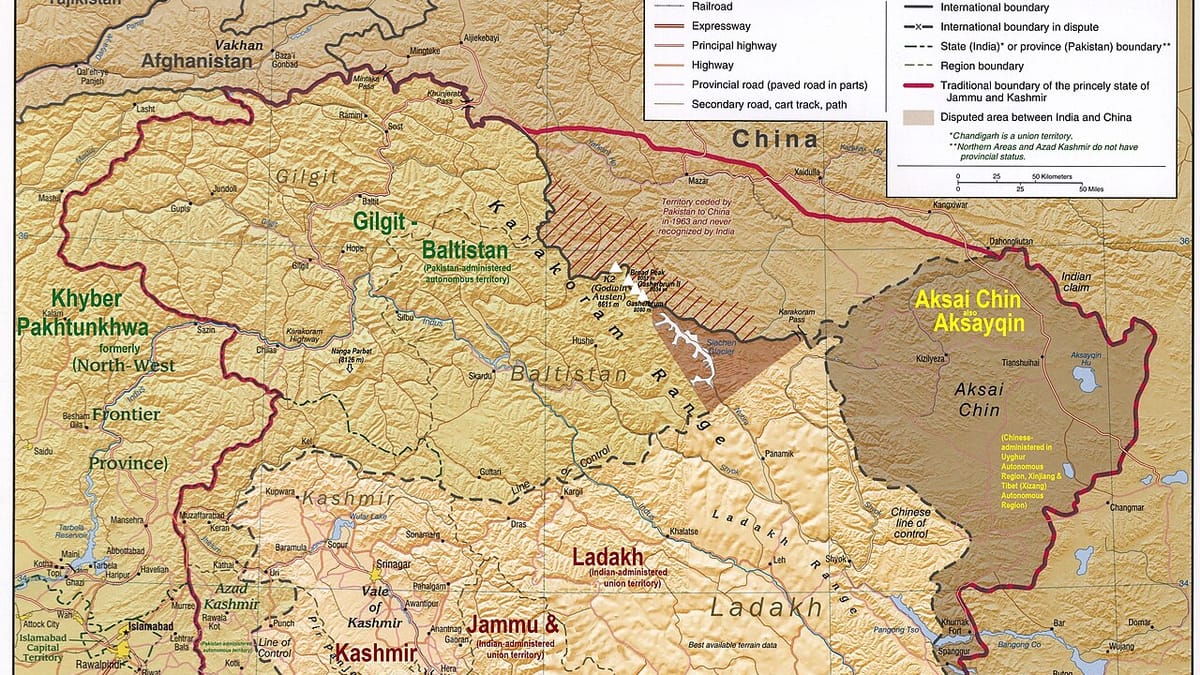
Pakistan has objected to Indian hydropower projects on the western rivers, including Baglihar and Kishanganga, and both sides have used the treaty's dispute mechanisms. In 2023 India sought to renegotiate the treaty, and in April 2025, after a militant attack in Indian-administered Kashmir, India announced it was holding the treaty "in abeyance". Pakistan said any attempt to stop its water would be considered an act of war. The treaty contains no provision for unilateral suspension.
Frequently Asked Questions
Which rivers does Pakistan control under the treaty?
The western rivers: the Indus, Jhelum and Chenab. India controls the eastern rivers: the Ravi, Beas and Sutlej.
Can India build dams on the western rivers?
The treaty allows India limited use, including run-of-the-river hydropower projects that meet design conditions. Several projects have been disputed by Pakistan.