The Geneva Conventions Explained: The Rules of War
What international humanitarian law protects, and why it matters even in the worst conflicts.
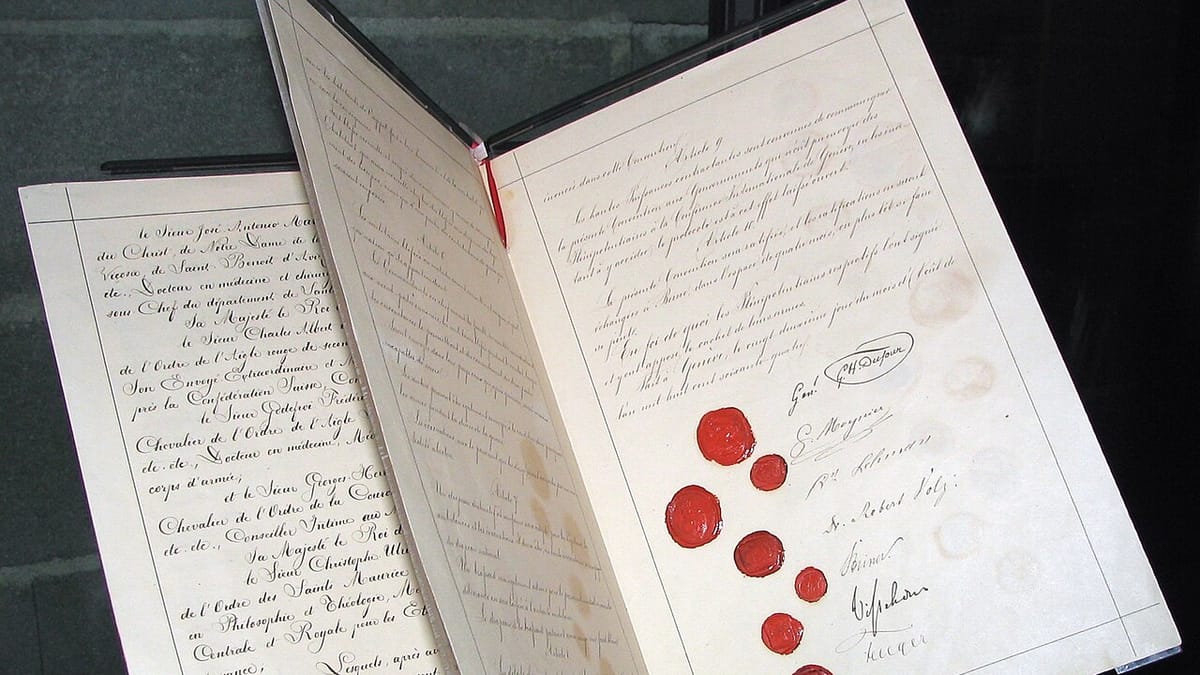
In brief: The Geneva Conventions are four international treaties, adopted in 1949 after World War II, that set out the rules for protecting people who are not, or are no longer, taking part in fighting. Together with their Additional Protocols, they are the core of international humanitarian law, the law of armed conflict.
Origins
In 1859 a Swiss businessman, Henry Dunant, witnessed thousands of wounded soldiers left to die after the Battle of Solferino in Italy. His campaign led to the founding of the International Committee of the Red Cross in 1863 and the first Geneva Convention in 1864. Dunant shared the first Nobel Peace Prize in 1901.
The four conventions
- First: Protects wounded and sick soldiers on land.
- Second: Protects wounded, sick and shipwrecked members of armed forces at sea.
- Third: Sets rules for the treatment of prisoners of war.
- Fourth: Protects civilians, including in occupied territory.
Common Article 3, shared by all four, sets minimum protections in civil wars and other non-international conflicts. Additional Protocols adopted in 1977 and 2005 expanded protections and added the Red Crystal emblem.
Key principles
Parties to a conflict must distinguish between combatants and civilians, may not launch attacks expected to cause excessive civilian harm, and must take precautions to protect civilians. Torture, hostage taking and attacks on hospitals and aid workers are prohibited.
Enforcement
States must prosecute grave breaches. International courts, including the International Criminal Court, can try individuals for war crimes. Violations remain widespread, but the conventions set the standard by which conduct in war is judged.
Frequently Asked Questions
Have all countries ratified the Geneva Conventions?
Yes. The four 1949 Conventions have been ratified by every UN member state, making them universally accepted.
What is a war crime?
A serious violation of the laws of war, such as deliberately attacking civilians, torturing prisoners or taking hostages.