Abdus Salam: Pakistan's First Nobel Laureate in Science
The physicist from Jhang who helped unify the forces of nature and opened science to the developing world.
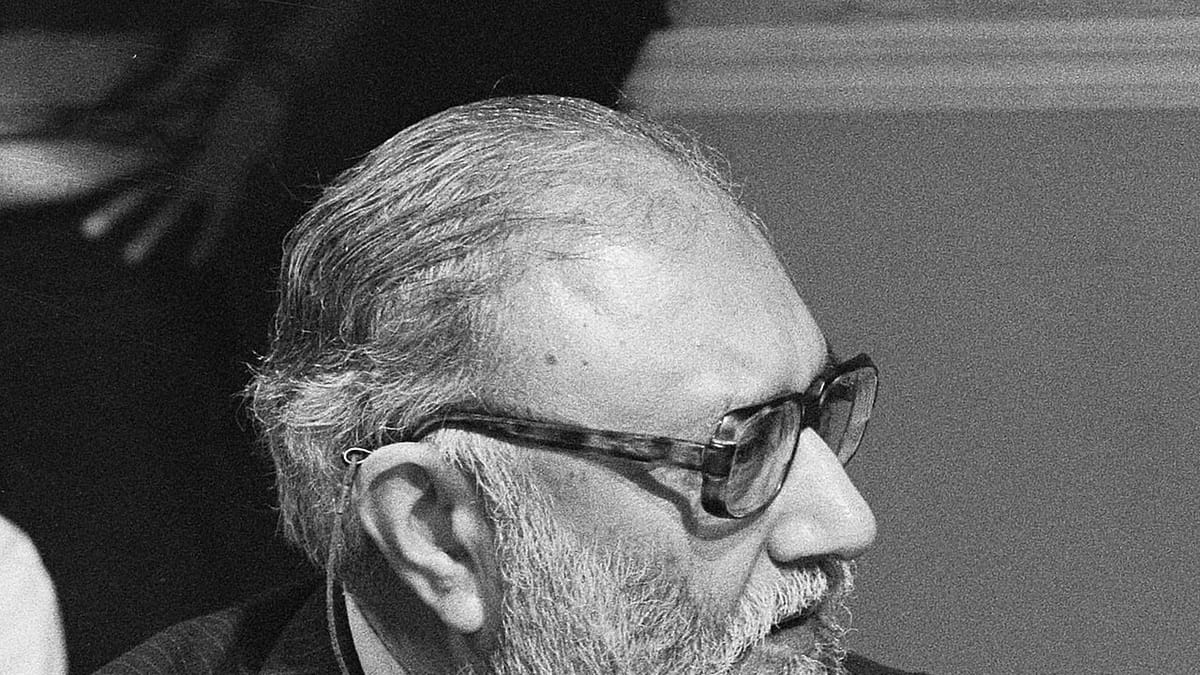
In brief: Mohammad Abdus Salam (1926 to 1996) was a theoretical physicist who shared the 1979 Nobel Prize in Physics for contributions to the electroweak theory, which unified two of the fundamental forces of nature. He was the first Pakistani and the first Muslim to win a Nobel Prize in science.
A prodigy from Punjab
Salam was born on 29 January 1926 in Santokdas, near Sahiwal, and grew up in Jhang. He set record marks in his matriculation examination and studied at Government College Lahore before winning a scholarship to St John's College, Cambridge, where he earned a double first in mathematics and physics and then a PhD.
Science and service
He returned to teach in Lahore but found few research opportunities and moved back to Britain, becoming professor of theoretical physics at Imperial College London in 1957. He also served as chief scientific adviser to the president of Pakistan and helped establish the Pakistan Atomic Energy Commission and the Space and Upper Atmosphere Research Commission (SUPARCO).
In 1964 he founded the International Centre for Theoretical Physics (ICTP) in Trieste, Italy, to give scientists from developing countries access to world-class research. It now bears his name.
The Nobel Prize
Salam, Sheldon Glashow and Steven Weinberg independently developed theories showing that the electromagnetic force and the weak nuclear force are two aspects of a single electroweak force. Experiments at CERN later confirmed key predictions, and the three shared the 1979 prize.
A complicated legacy at home
Salam belonged to the Ahmadiyya community. In 1974 Pakistan's parliament declared Ahmadis non-Muslims, and he left his government posts in protest. He died in Oxford on 21 November 1996 and was buried in Rabwah. The word "Muslim" was later effaced from his gravestone under Pakistani law. Recognition of his achievements in Pakistan has grown in recent years, but remains contested.
Frequently Asked Questions
What did Abdus Salam win the Nobel Prize for?
He shared the 1979 Nobel Prize in Physics with Sheldon Glashow and Steven Weinberg for the theory unifying the weak and electromagnetic interactions.