Nokia: How the World's Biggest Phone Maker Lost the Smartphone Race
A case study of how market leadership can become a trap.
In brief: In the 2000s, the Finnish company Nokia was the world's largest maker of mobile phones. Its devices were reliable, affordable and everywhere, from Europe to South Asia. After Apple launched the iPhone in 2007 and Google's Android spread, Nokia's market share collapsed. In 2014 it sold its phone business to Microsoft.
From paper mill to phones
Nokia was founded in 1865 as a paper mill on the Nokianvirta river in Finland, and over the next century made rubber boots, cables and electronics. In the 1990s, under chief executive Jorma Ollila, it focused on mobile phones and benefited from Europe's adoption of the GSM standard. By 1998 it was the world's largest phone maker.
The smartphone shift
Nokia actually made early smartphones and had experimented with touchscreens. Its Symbian operating system powered most smartphones in the mid 2000s. But when the iPhone arrived, built around a large touchscreen, a powerful web browser and later an app store, Symbian proved hard to adapt. Android, given to phone makers free by Google, rapidly took the mass market.
What went wrong
- Software, not hardware: Nokia excelled at making hardware efficiently, but the competition had shifted to software and app ecosystems.
- Internal politics: Researchers have described a culture in which middle managers were afraid to give bad news to senior leaders.
- Too many platforms: Nokia split its efforts between Symbian, MeeGo and other projects.
- A big bet that failed: In 2011, chief executive Stephen Elop chose Microsoft's Windows Phone instead of Android, and it never gained enough developers or customers.
The lesson
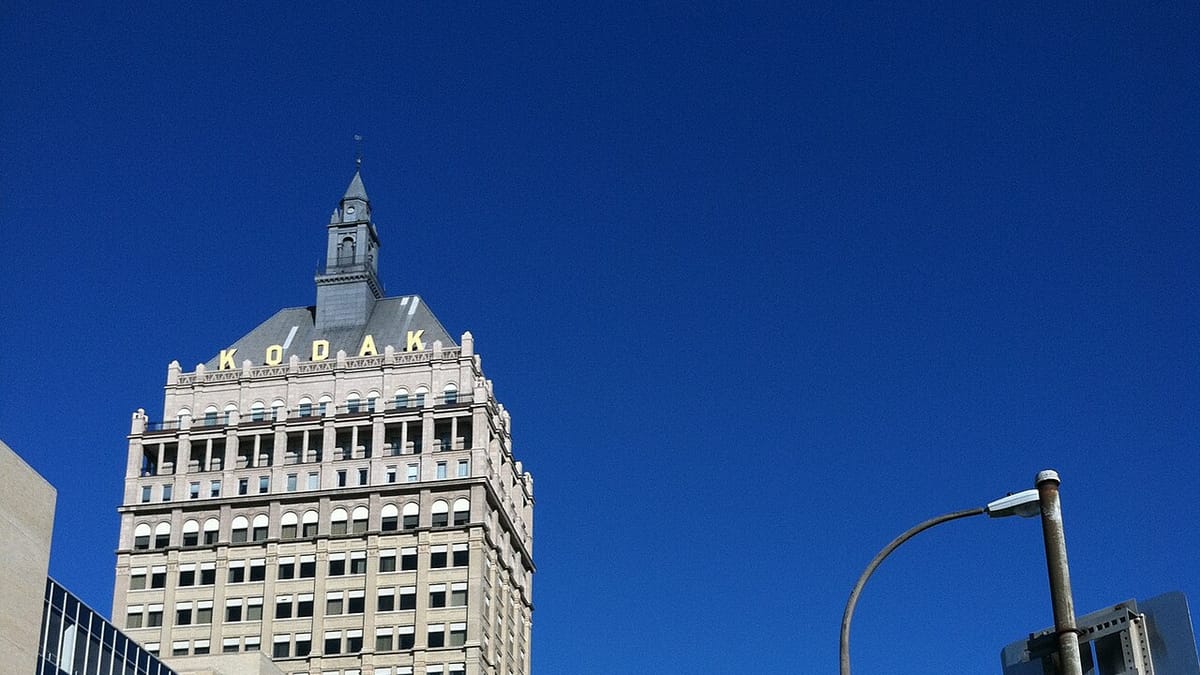
Like Kodak, Nokia shows that success in one era can blind a company to the next. Yet Nokia also shows reinvention: it survived by refocusing on network equipment, including 5G infrastructure.
Frequently Asked Questions
Does Nokia still exist?
Yes. Nokia sold its phone business to Microsoft in 2014 and refocused on telecommunications networks, where it remains a major company. Nokia-branded phones were later made under licence by HMD Global.