Mary Wollstonecraft: The Founding Mother of Feminist Thought
In 1792 she argued that women only seemed inferior because they were denied education.
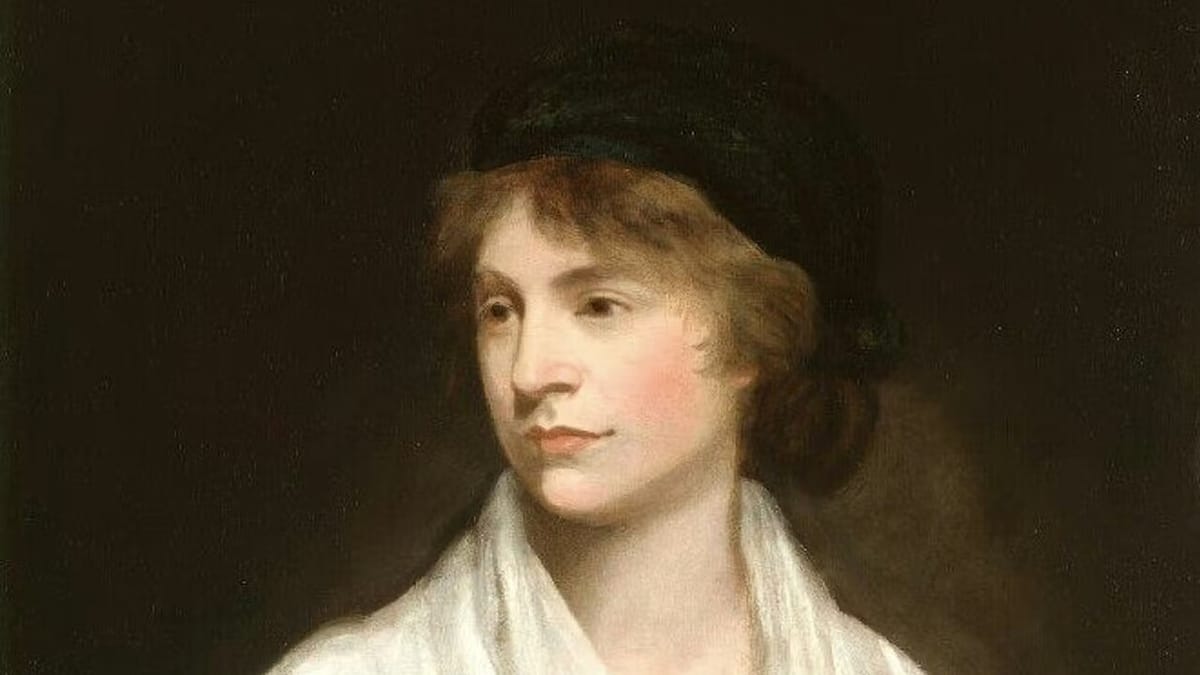
In brief: Mary Wollstonecraft (1759 to 1797) was an English writer and philosopher. Her book A Vindication of the Rights of Woman, published in 1792, argued that women are not naturally inferior to men but appear so because they are denied education. It is one of the founding texts of feminism.
A hard early life
Wollstonecraft was born in London on 27 April 1759. Her father was violent and wasted the family's money. She worked as a lady's companion, ran a school and served as a governess, experiences that showed her how few options women had.
The Vindications
Working for the radical publisher Joseph Johnson, she wrote A Vindication of the Rights of Men (1790), a reply to Edmund Burke's attack on the French Revolution. Two years later came A Vindication of the Rights of Woman. She argued that society trained women to be ornamental and dependent, and that both women and the nation would benefit if girls received the same rational education as boys.
Revolution and love
She travelled to revolutionary France, had a daughter with an American adventurer, Gilbert Imlay, and later married the philosopher William Godwin. She died on 10 September 1797, days after giving birth to her second daughter, Mary, who became Mary Shelley, author of Frankenstein.
Legacy
After her death, Godwin's frank memoir of her unconventional life damaged her reputation for a century. Later feminist movements rediscovered her, and she is now recognised as a pioneer of the argument for equal rights.
Frequently Asked Questions
What did A Vindication of the Rights of Woman argue?
That women are rational beings who appear inferior only because they lack education, and that they deserve the same fundamental rights as men.