Food & CookingHow-To
How to Sharpen a Kitchen Knife With a Whetstone
Hold a steady angle, work both sides and finish with honing.
This guide is general information. For medical, legal, financial or safety decisions, consult a qualified professional.
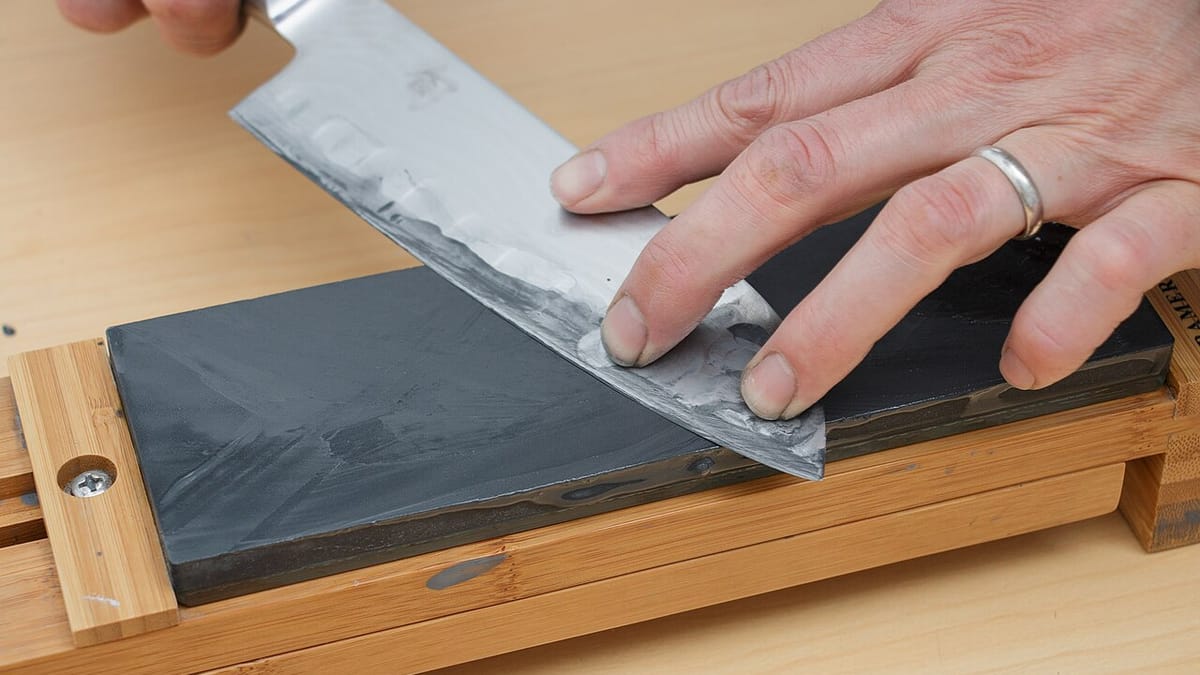
In brief: A sharp knife is safer than a dull one because it needs less force and slips less. Honing realigns the edge between sharpenings; sharpening on a stone removes metal to create a new edge.
What you'll need
- Whetstone with coarse and fine sides, such as 1000 and 6000 grit
- Water or honing oil, depending on the stone
- Damp towel
Steps
- Prepare the stone. Soak a water stone for 10 to 15 minutes or as directed, and set it on a damp towel so it does not slide.
- Find the angle. Hold the blade at about 15 degrees for most Japanese knives and about 20 degrees for most Western knives.
- Sharpen the first side. Starting on the coarse side, push the blade across the stone from heel to tip in a sweeping motion, maintaining the angle. Repeat 10 to 15 times.
- Check for a burr. Feel carefully along the opposite edge for a slight rough lip. This shows you have sharpened to the edge.
- Sharpen the other side. Repeat the same number of strokes on the other side.
- Refine on the fine grit. Repeat on the fine side with lighter pressure to polish the edge.
- Clean and test. Rinse and dry the knife and test it on paper or a tomato.
Warnings
- Always move the blade away from your body and keep fingers clear of the edge.
Frequently Asked Questions
How often should I sharpen my knives?
Hone before regular use and sharpen every few months, depending on use.