How to Do Hands-Only CPR on an Adult
Two steps that can double or triple a person's chance of surviving cardiac arrest.
This guide is general information. For medical, legal, financial or safety decisions, consult a qualified professional.
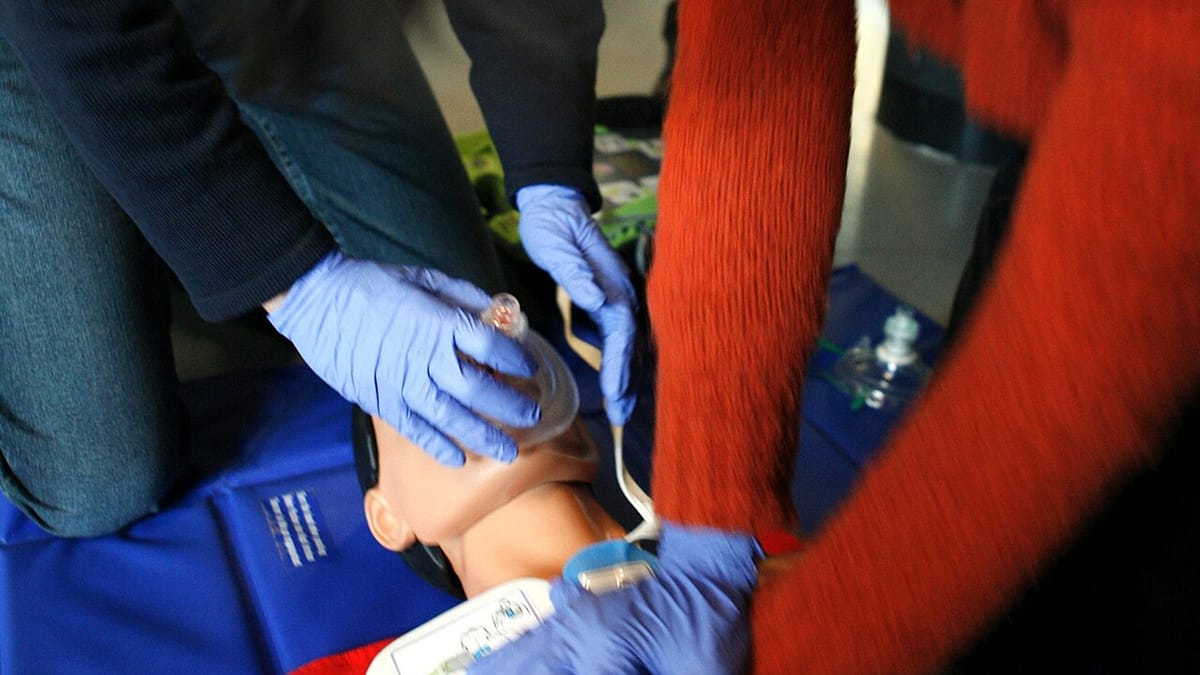
In brief: Hands-only CPR is recommended by the American Heart Association for bystanders who see a teen or adult suddenly collapse. It means calling emergency services and giving continuous chest compressions until help arrives. This guide is not a substitute for a certified course, which we strongly recommend.
Steps
- Check the scene and the person. Make sure the area is safe. Tap the person and shout to see if they respond. Check whether they are breathing normally; gasping is not normal breathing.
- Call emergency services. Call 911 in the US, 112 in Europe or your local emergency number, or ask someone else to call and put the phone on speaker. Send someone to find an AED if one is nearby.
- Position your hands. Kneel beside the person, who should be on their back on a firm surface. Place the heel of one hand in the center of the chest, on the lower half of the breastbone, and the other hand on top.
- Push hard and fast. With straight arms and shoulders over your hands, push down at least 2 inches at a rate of 100 to 120 compressions a minute. The beat of the song Stayin' Alive is about the right speed.
- Let the chest rise. Allow the chest to come all the way back up between compressions. Minimize pauses.
- Use an AED as soon as it arrives. Turn it on and follow its spoken instructions. It will tell you when to stand clear and when to continue compressions.
- Keep going. Continue until emergency responders take over, the person starts breathing normally, or you are too exhausted to continue. Switch with another person every two minutes if possible.
Tips
- Take a certified course from the American Red Cross, the American Heart Association or a national first aid organization; many take only a few hours.
- Good Samaritan laws in many places protect people who give emergency help in good faith.
Warnings
- For infants and children, and for drowning or drug overdose, CPR with rescue breaths is recommended by trained rescuers.
- Do not delay calling for help. The emergency dispatcher can coach you through CPR.
Frequently Asked Questions
Do I need to give mouth-to-mouth?
For a teen or adult who suddenly collapses, hands-only CPR is recommended for untrained bystanders. Trained rescuers may add breaths.
Can I hurt someone doing CPR?
Ribs can crack, but without CPR a person in cardiac arrest is likely to die. Effective compressions are more important.