Food & CookingHow-To
How to Bake No-Knead Bread
Four ingredients, a long rest and a hot pot make a crusty artisan loaf.
This guide is general information. For medical, legal, financial or safety decisions, consult a qualified professional.
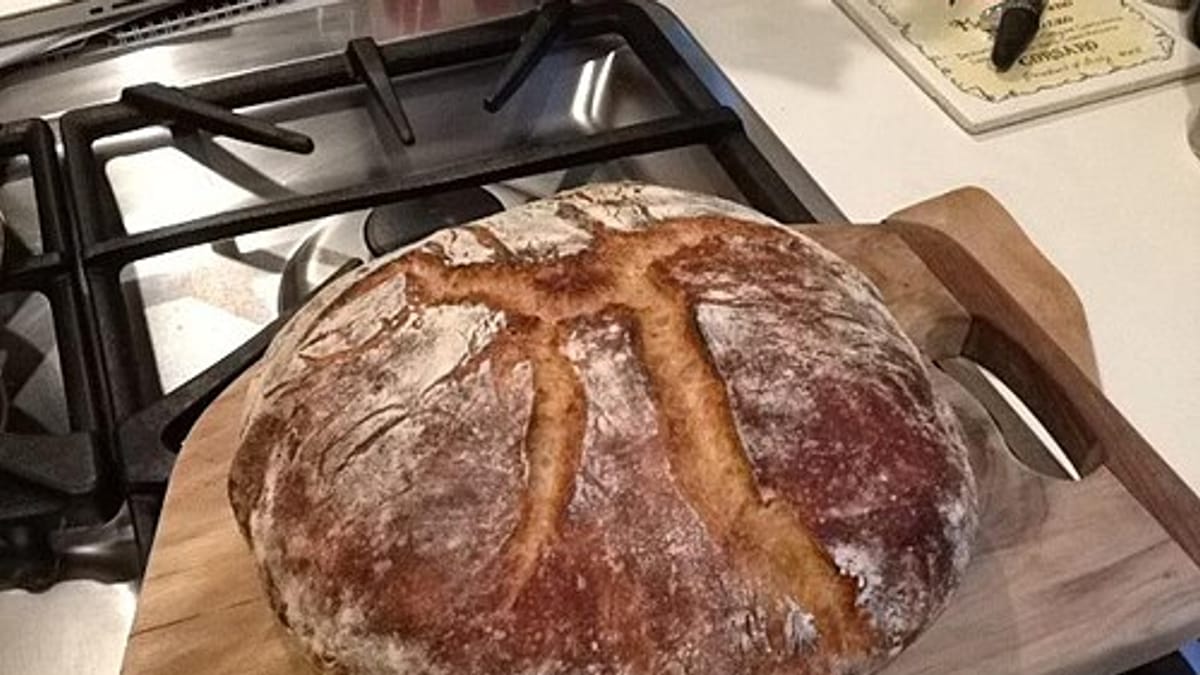
In brief: The no-knead method, popularized in 2006 by baker Jim Lahey and the New York Times, uses a long, slow fermentation to develop gluten and flavor. A heavy pot traps steam for a crisp crust.
What you'll need
- 3 cups (about 400 g) bread or all-purpose flour
- 1 and a half teaspoons salt
- Quarter teaspoon instant yeast
- 1 and a half cups (about 350 ml) lukewarm water
- Dutch oven or heavy lidded pot
Steps
- Mix the dough. Stir flour, salt and yeast in a bowl, add water and mix until a shaggy, sticky dough forms.
- Let it rise. Cover and leave at room temperature for 12 to 18 hours, until bubbly and more than doubled.
- Shape. Turn the dough onto a floured surface, fold it over itself a few times and shape a round loaf.
- Second rise. Place it on floured parchment, cover and let it rise for 1 to 2 hours.
- Preheat the pot. Thirty minutes before baking, put the empty covered pot in the oven at 450°F (230°C).
- Bake covered, then uncovered. Lower the dough on its parchment into the hot pot, cover and bake 30 minutes. Uncover and bake 15 to 20 minutes more until deep brown.
- Cool. Cool on a rack for at least an hour before slicing.
Warnings
- The pot and lid will be extremely hot; use thick oven mitts.
Frequently Asked Questions
Why does no-knead bread work?
Over a long rest, enzymes and gentle movement from fermentation organize gluten without kneading.