The 1973 Constitution of Pakistan Explained: Structure, Rights and Key Amendments
How Pakistan's supreme law divides power, what rights it guarantees and how it has been changed.
In brief: The Constitution of Pakistan is the country's supreme law. It was passed by the National Assembly on 10 April 1973 and came into force on 14 August 1973. It establishes Pakistan as a federal parliamentary republic with Islam as the state religion, guarantees fundamental rights, and divides power between the federation and four provinces. It has been amended many times, most significantly by the 18th Amendment in 2010.
Pakistan's earlier constitutions
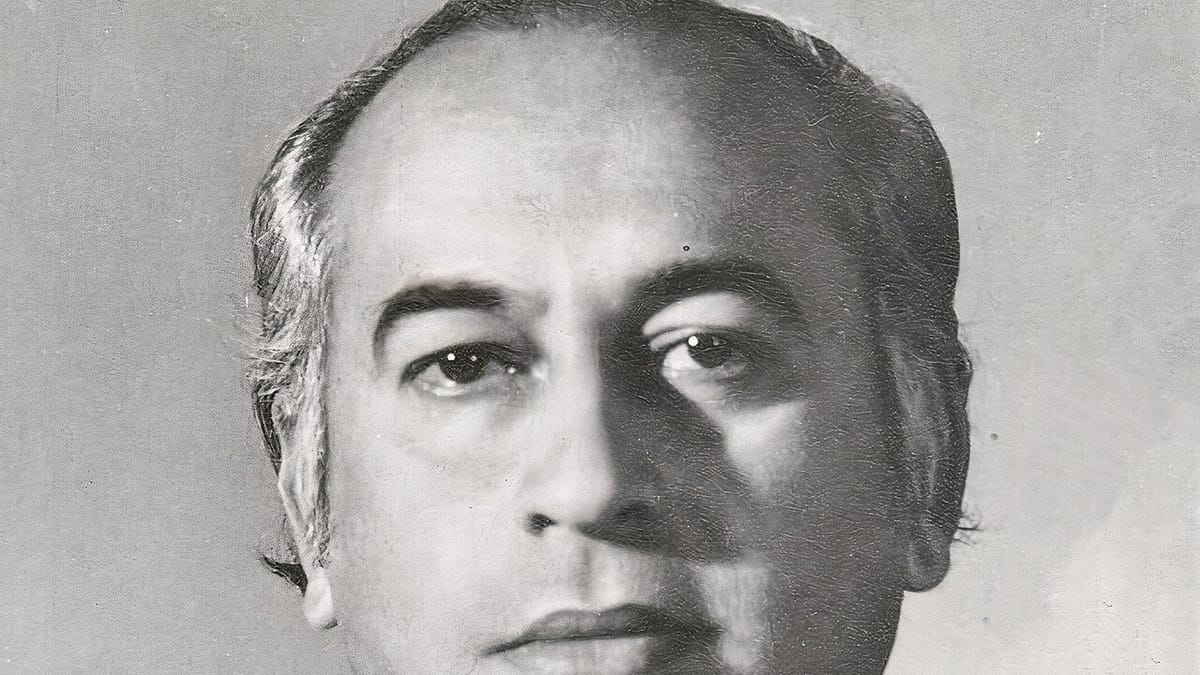
Pakistan was first governed under an adapted Government of India Act 1935. Its first constitution, adopted on 23 March 1956, was abrogated in 1958 when martial law was imposed. A second constitution, introduced by Ayub Khan in 1962, created a presidential system and was abrogated in 1969. After the separation of East Pakistan in 1971, the government of Zulfikar Ali Bhutto led negotiations that produced the 1973 Constitution, which won the support of almost all parties in the assembly.
How power is organised
- Parliament has two houses: the National Assembly, elected directly by population, and the Senate, in which each province has equal representation.
- The Prime Minister, elected by the National Assembly, leads the government and the federal cabinet.
- The President is head of state, elected by an electoral college of both houses and the provincial assemblies, and acts largely on the advice of the Prime Minister.
- The provinces, Punjab, Sindh, Khyber Pakhtunkhwa and Balochistan, each have an elected assembly, a Chief Minister and a Governor.
- The judiciary includes the Supreme Court, the high courts and the Federal Shariat Court.
Fundamental rights
Articles 8 to 28 guarantee rights including security of person, protection against arbitrary arrest, freedom of movement, assembly, association, speech and religion, equality before the law and protection of property. Article 25 states that there shall be no discrimination on the basis of sex, and allows special measures for the protection of women and children. Article 25A, added in 2010, makes free and compulsory education a right for all children aged five to sixteen.
Key amendments
- 8th Amendment (1985): passed under General Zia-ul-Haq, it gave the President power under Article 58(2)(b) to dissolve the National Assembly, a power used several times in the 1990s.
- 13th Amendment (1997): removed that power.
- 17th Amendment (2003): under General Pervez Musharraf, it restored strong presidential powers.
- 18th Amendment (2010): passed unanimously, it restored the parliamentary character of the constitution, abolished the concurrent legislative list so that many subjects moved to the provinces, renamed the North-West Frontier Province as Khyber Pakhtunkhwa and added the right to education.
- 26th Amendment (2024): changed how the Chief Justice of Pakistan is appointed and created constitutional benches to hear constitutional cases.
Interruptions
The constitution was suspended or held in abeyance under military rule from 1977 to 1985 and after the 1999 coup, before being restored with amendments. Article 6 makes the abrogation or subversion of the constitution an act of high treason.
Why it matters
For citizens, the constitution is the source of their rights and the basis on which courts can strike down unlawful government action. Debates about provincial autonomy, the role of the judiciary and civil military relations in Pakistan are, in large part, debates about how this document is interpreted and amended.
Frequently Asked Questions
When did the 1973 Constitution come into force?
On 14 August 1973, after the National Assembly passed it on 10 April 1973.
What did the 18th Amendment do?
It strengthened Parliament, transferred many subjects to the provinces by abolishing the concurrent list, renamed NWFP as Khyber Pakhtunkhwa and made education a fundamental right.
What does Article 25A guarantee?
Free and compulsory education for all children aged five to sixteen.